

Getting along with your manager can make everyday work easier. Friendship is not automatically a problem, and being approachable does not make you responsible for another person’s behaviour. What matters is whether work decisions stay fair and you can set limits without pressure.
A manager may influence pay, assignments, promotion or references. That difference in authority makes clarity useful, even when both people mean well. Consider the specific situations below rather than judging closeness by gossip or a label.

Keep feedback specific and part of the job
Friendly conversations do not replace useful feedback. Ask for clear expectations, examples of what is going well and the next skill or task to focus on. A regular work check-in can help separate that discussion from social time.
You might say, “I value our working relationship and would like direct feedback on this project.” Feedback should concern the work and leave room for questions. Friendship does not justify insults, public humiliation or demands that you accept criticism without explanation.
Ask for fair and understandable decisions
Receiving an opportunity does not by itself mean you are being favoured. Consider whether responsibilities, credit and access to development are explained consistently across the team. Managers are responsible for making and communicating fair decisions.
Keep a clear record of your work and contributions. If a decision affects you, ask about the criteria through a normal work channel. You do not have to accept gossip or bullying as the price of a good relationship with a manager.
Leave private jokes and other people’s information out
Humour can help people connect, but a joke should not depend on humiliating a colleague or excluding someone from information they need. Avoid sharing confidential work details as part of a friendship.
If a conversation becomes uncomfortable, a brief boundary may be enough: “I’d rather not discuss their private life” or “Let’s keep this about the project.” You can remain civil without laughing along or agreeing with a personal remark.
Give meetings a clear purpose
An agenda, a time limit and a short note of decisions can keep work conversations useful. Some personal conversation is ordinary; the concern is whether it repeatedly crowds out your work or feels difficult to decline.
Try, “We have twenty minutes left. Could we cover the deadline and who owns the next task?” If support for a health or personal issue is needed, you can ask about the appropriate process without sharing more detail than you want or the process requires.
Make social invitations genuinely optional
A lunch, team event or friendly conversation outside work is not automatically inappropriate. Consider whether you can decline, whether invitations are inclusive and whether work opportunities seem tied to attending.
You can say, “Thanks for inviting me; I’m keeping evenings for other commitments.” You do not need to invent an excuse or provide access to your private accounts. Check your organisation’s policies if a friendship or relationship affects reporting lines or creates a conflict of interest.
Set limits on emotional support and private time
You may choose to share something personal with a manager, but neither person should have to become the other’s main emotional support. Consider whether after-hours contact is agreed and necessary for your role or has become an unspoken expectation.
A useful response might be, “I’m not the best person to help with that. Can we return to the work question?” If your circumstances require a different work arrangement, use the appropriate process and ask who will see the information you provide.
Take unwanted attention or pressure seriously
Unwanted sexual comments, touching, repeated invitations after a refusal or threats connected to work deserve support. Being friendly, having accepted an earlier invitation or not objecting immediately does not make the behaviour your fault.
If it is safe, keep factual notes of dates, words, messages and witnesses, using a method that respects workplace confidentiality and your privacy. Consider a trusted manager outside the reporting line, a union representative, an employee support service or another appropriate channel. You do not have to confront the person alone.
In Great Britain, Acas explains sexual harassment at work and workplace bullying. Elsewhere, seek guidance from a relevant local employment authority or qualified adviser. Policies, procedures and legal options depend on where you work and the circumstances.
Ask for ordinary workplace criteria when decisions involve a friend
If a supervisor you’re close to discusses a shift swap or a promotion socially, ask to handle the decision through the usual channel. Keep the request practical. “What criteria should I use, and where should I send the information?”
If unwanted conduct or pressure arises, consult your workplace’s reporting policy and seek local advice about your options. In the United States, the EEOC describes workplace harassment and employer responsibilities.
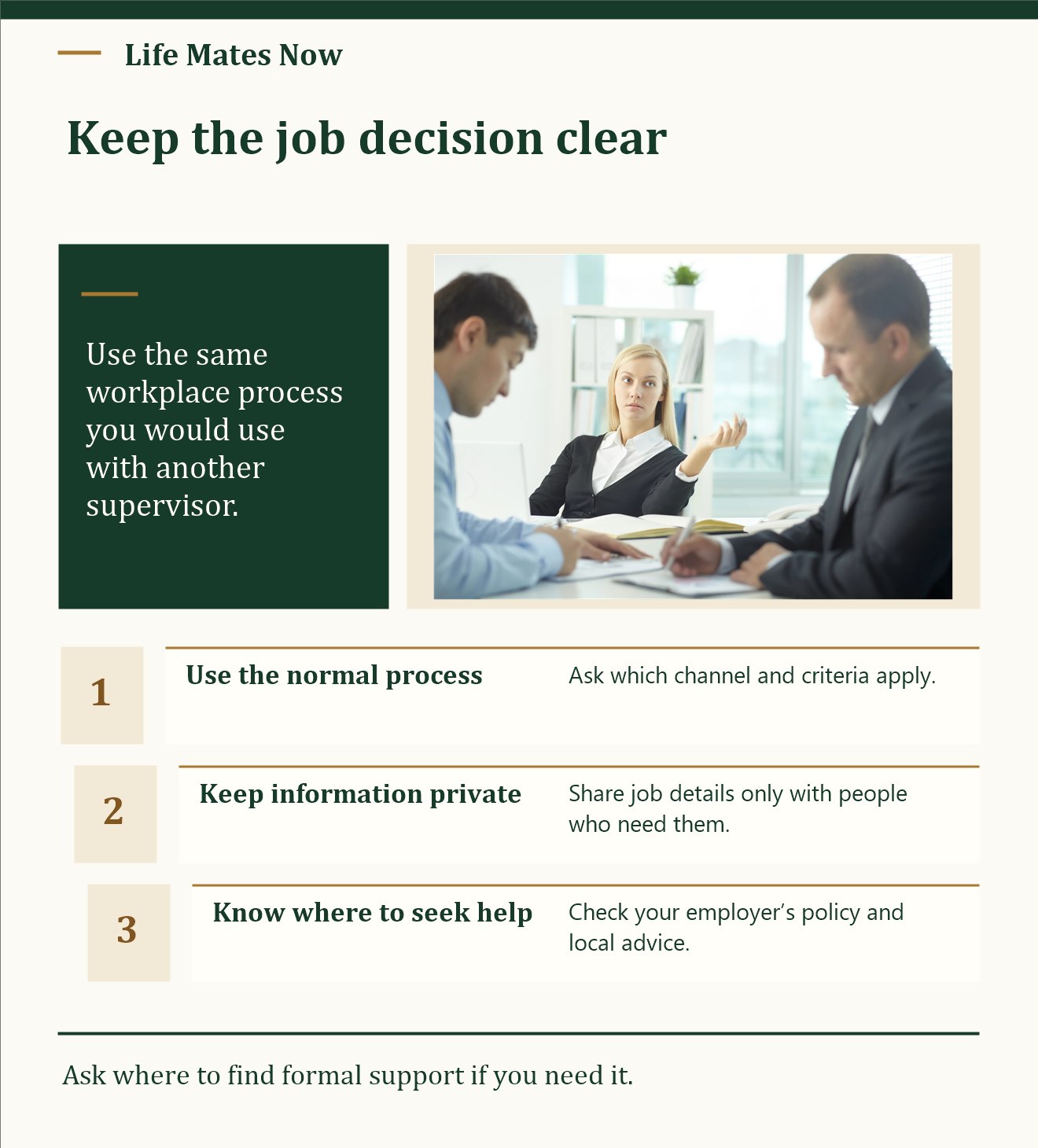
Read the infographic in text
Keep the job decision clear
Use the same workplace process you would use with another supervisor.
- Use the normal process Ask which channel and criteria apply.
- Keep information private Share job details only with people who need them.
- Know where to seek help Check your employer’s policy and local advice.
Ask where to find formal support if you need it.
Frequently asked questions
1. How can I keep feedback fair when I’m friends with my supervisor?
Ask for specific feedback and the same written criteria and channels the workplace uses for others.
2. What if a work decision comes up socially?
Suggest continuing the conversation through the ordinary workplace process. Ask what information is needed and where to submit it.
3. Can I decline a supervisor’s social invitation?
You can decline an optional invitation and decide which details to share. If declining leads to repeated pressure or unfair treatment, seek workplace or local guidance.
4. How should I handle information shared informally?
Keep sensitive workplace information private and use authorised channels when handling or reporting it. Ask your workplace about applicable policies.
5. Where can I ask about harassment or retaliation?
Check your employer’s reporting procedure, union or worker support options, and applicable local law. In the United States, the EEOC provides information on workplace harassment.