

Being called an “old soul” can feel like recognition: perhaps you enjoy reflection, value close relationships or feel drawn to a different pace of life. For some people, the phrase also connects with beliefs about reincarnation and learning across lifetimes.
You can explore that meaning without assigning yourself a literal age or placing anyone above or below you. A personality trait, a difficult relationship or a period of sadness does not establish how many lives a person has lived.
What soul age can mean to you
People use “old soul” in different ways. One person may mean thoughtful or experienced; another may be describing a spiritual belief. Ask what the phrase means to you before using it to explain your identity or someone else’s choices.
If you are interested in soul-stage ideas, the five themes below offer questions for reflection. They are not a measurement or a fixed route that everyone follows. You might need security in one part of life while feeling confident and generous in another.
1. Safety and belonging
Start with the conditions that help you feel secure and included. Are you able to rest, ask questions and say no? Which people give you room to be yourself?
Needing reassurance, practical help or stability does not make you spiritually younger. Consider one present need and an action that might support it, such as asking a trusted person for company or making an everyday task more manageable.

2. Structure and personal values
Family expectations, traditions and routines can give life meaning. They can also leave questions about which choices you want to keep. Ask: “Am I doing this because it matters to me, because it is necessary, or because I fear disapproval?”
You can respect a tradition while considering how it fits your circumstances. A partner’s different beliefs do not make either person less developed; discuss the practical choices those differences affect.
3. Independence and ambition
Wanting to learn, work, create or be recognised can sit alongside a spiritual life. Ambition does not prove that someone is shallow, and having fewer resources says nothing about their soul or worth.
Consider whether a goal still fits your values and what it costs in time and energy. You might continue, change the pace or choose something else. There is no need to turn a job title, income or relationship status into a spiritual score.
4. Empathy and connection
Reflection can include curiosity about another person’s experience. Try listening without assuming you already know what they feel. You can ask, “Would you like me to listen, or would practical help be useful?”
Empathy does not require agreement, constant availability or accepting hurtful behaviour. Our guide to setting boundaries considers how to express a limit while leaving the other person free to choose their response.
5. Perspective and responsibility
You may value the ability to reconsider an opinion, acknowledge a mistake or recognise that you cannot control everything. Those are choices you can practise now, without proving a particular soul stage.
Notice the effect of your actions. If you hurt someone, a clear acknowledgement and changed behaviour matter more than describing yourself as wise. You can offer experience when it is welcome without claiming that you know another person’s path better than they do.
Reflect without ranking yourself or a partner
Choose a question that feels useful: What do I value? Where do I need support? What would a respectful next step look like? Write one concrete response and return to it later to see what you notice.
In dating, look at consent, honesty, shared expectations and follow-through. Calling someone an old soul cannot establish compatibility, and a soul-age label does not explain or excuse mistreatment. The guide to finding a compatible partner keeps those everyday choices in view.
You may keep a spiritual interpretation that matters to you while remaining open to learning about yourself and the person in front of you.
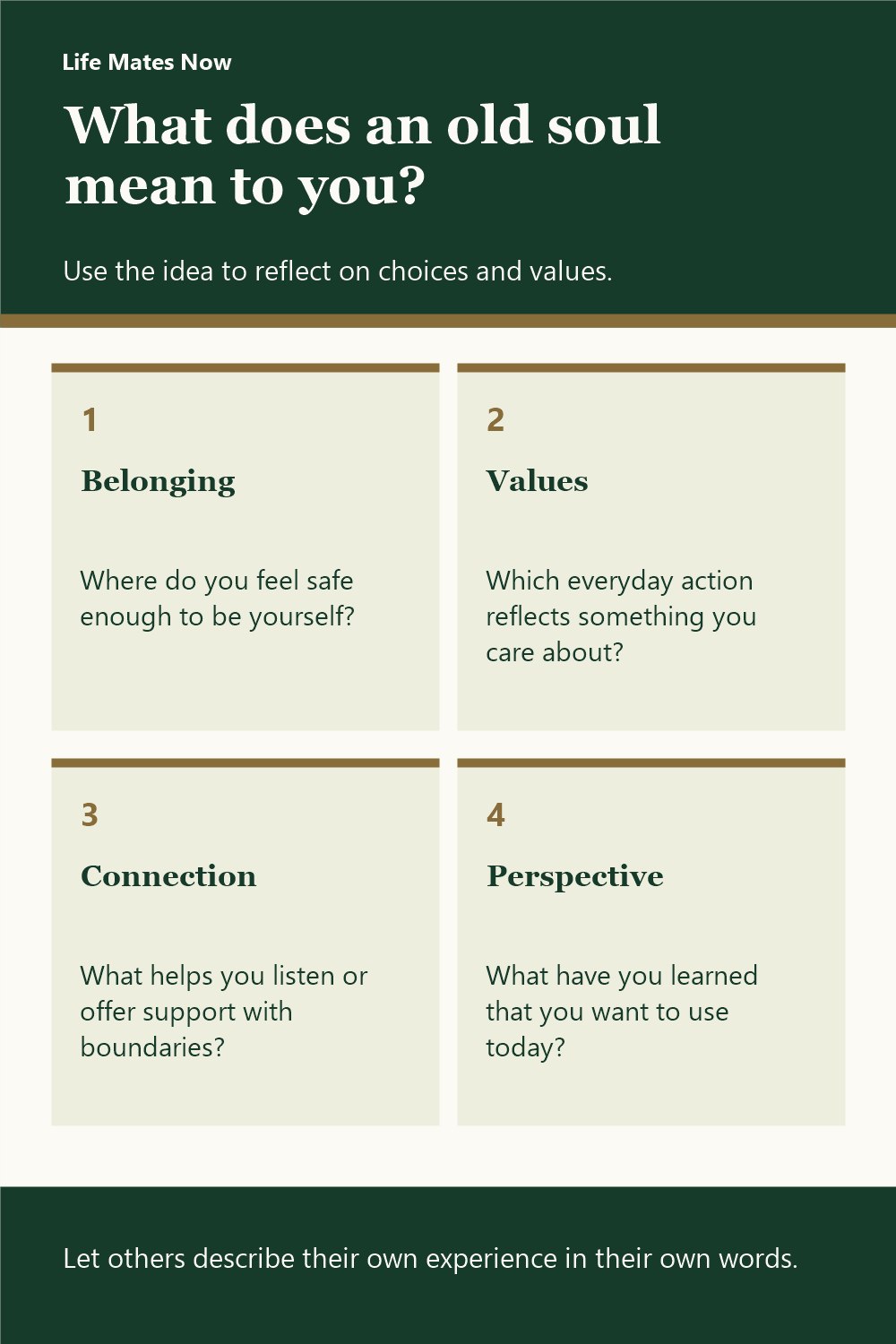
Read the infographic in text
What does an old soul mean to you? Use the idea to reflect on choices and values.
- Belonging Where do you feel safe enough to be yourself?
- Values Which everyday action reflects something you care about?
- Connection What helps you listen or offer support with boundaries?
- Perspective What have you learned that you want to use today?
Let others describe their own experience in their own words.