

When you live with a partner, ending the relationship can also mean sorting out housing, possessions, bills and everyday routines. You may know that you want to leave while still needing time or help to work through those arrangements.
Start with the most urgent practical need, rather than trying to settle everything in one conversation. A relationship decision does not automatically resolve a tenancy, mortgage, joint account or parenting arrangement. The following steps can help you identify what needs attention and where local support may be useful.
1. Put safety before a breakup conversation
If you fear threats, violence, monitoring or retaliation, you do not need to announce the breakup in person or alone. Seek private help to plan around your circumstances. The US National Domestic Violence Hotline’s preparation guide explains how an advocate can help with safety planning and local resources. Elsewhere, look for a domestic-abuse service in your location.
If your internet use may be monitored, consider a safer device or another way to contact support. Clearing a browser history does not guarantee privacy. In immediate danger, contact your local emergency service when you can safely do so. The ordinary planning suggestions below may need adapting with specialist support.
2. State the decision clearly when it is safe
You do not have to prove that your partner is entirely at fault, exhaust every possible repair attempt or obtain agreement to end the romantic relationship. If a conversation is safe, keep the decision clear: “I have decided to end our relationship. We need to discuss the arrangements for living separately.”
Acknowledge that the news may be painful without promising reconciliation to soften it. If you are still undecided, say that honestly instead of presenting a trial separation as a test your partner must pass. Keep the emotional conversation separate from detailed arrangements when trying to cover both at once becomes overwhelming.
3. Check housing options and local rights
Find out whose names appear on the tenancy or ownership documents, what payments are due and what notice or other conditions may apply. Ask a qualified local housing or legal adviser about your position before making assumptions about who must leave, giving up a home or agreeing to a move-out date.
A list of possible places to stay can help you compare cost, transport, accessibility and any care responsibilities. Check that an option is genuinely available before relying on it. In the United States, USA.gov lists legal-aid resources, including help with family and housing issues; eligibility and services vary.

4. List shared obligations before changing accounts
Make a private inventory of the relevant bills, accounts, debts, insurance and recurring payments, using records you are entitled to access. Note names on each agreement, payment dates and questions for the provider or adviser. A discussion between partners may not be enough to release either person from an existing obligation.
For example, the US Office of the Comptroller of the Currency explains that assigning joint credit debt to one spouse in a divorce decree does not itself end the account holders’ obligations to the lender. Ask what applies to your accounts before closing them, moving shared money or assuming that removing a name settles a debt.
5. Arrange belongings and everyday essentials
Identify items you need for daily life, such as medication, clothing, work equipment and documents you are entitled to keep. Where discussion is safe, make a list of belongings you agree about and set disputed items aside for advice or a later conversation. Photographs or a written inventory may help keep practical arrangements clear.
Plan collection times, transport and any help with lifting or access. If a handover may be unsafe, ask a local support service about safer options. Do not use belongings as a reason for repeated unwanted contact. Seek local advice rather than assuming you can change locks or dispose of possessions because the relationship has ended.
6. Give children and pets a separate care plan
If you share children, focus on their immediate needs: where they will be cared for, school or nursery arrangements, medication, transport and a reliable way for responsible adults to communicate. Avoid asking children to carry breakup messages, choose sides or manage either adult’s feelings.
For decisions about residence, contact, custody or a child’s safety, get appropriate local family-law or specialist support. Pets also need a plan for food, veterinary care, suitable housing and costs. Ownership or care disputes may need advice; an informal arrangement should not be treated as automatically settling legal questions.
7. Make temporary house-sharing arrangements explicit
If you remain under the same roof for a time and it is safe to discuss, consider sleeping spaces, privacy, household tasks, meals, visitors and the communication you actually need. Neither person owes romantic or sexual contact because they still share an address.
Put practical agreements in writing if that is useful and safe, and distinguish a proposed arrangement from something both people have accepted. Agree when to review it. Temporary cooperation does not mean you must resume the relationship, and difficulties sharing a home do not mean you have to resolve them without outside help.
8. Ask for practical support and choose one next step
You may need company, a lift, help packing, a place to stay or someone to sit with you while you contact an adviser. Be specific about the help you want and what you want kept private. Friends do not have to take over negotiations or pass messages between you and your former partner.
Choose one manageable action for today: locate a document, check a housing option or arrange a call for advice. There is no guaranteed timetable for feeling better or separating every part of a shared life. For the emotional side, see Getting Over an Ex: Your Pace, Contact and Support.
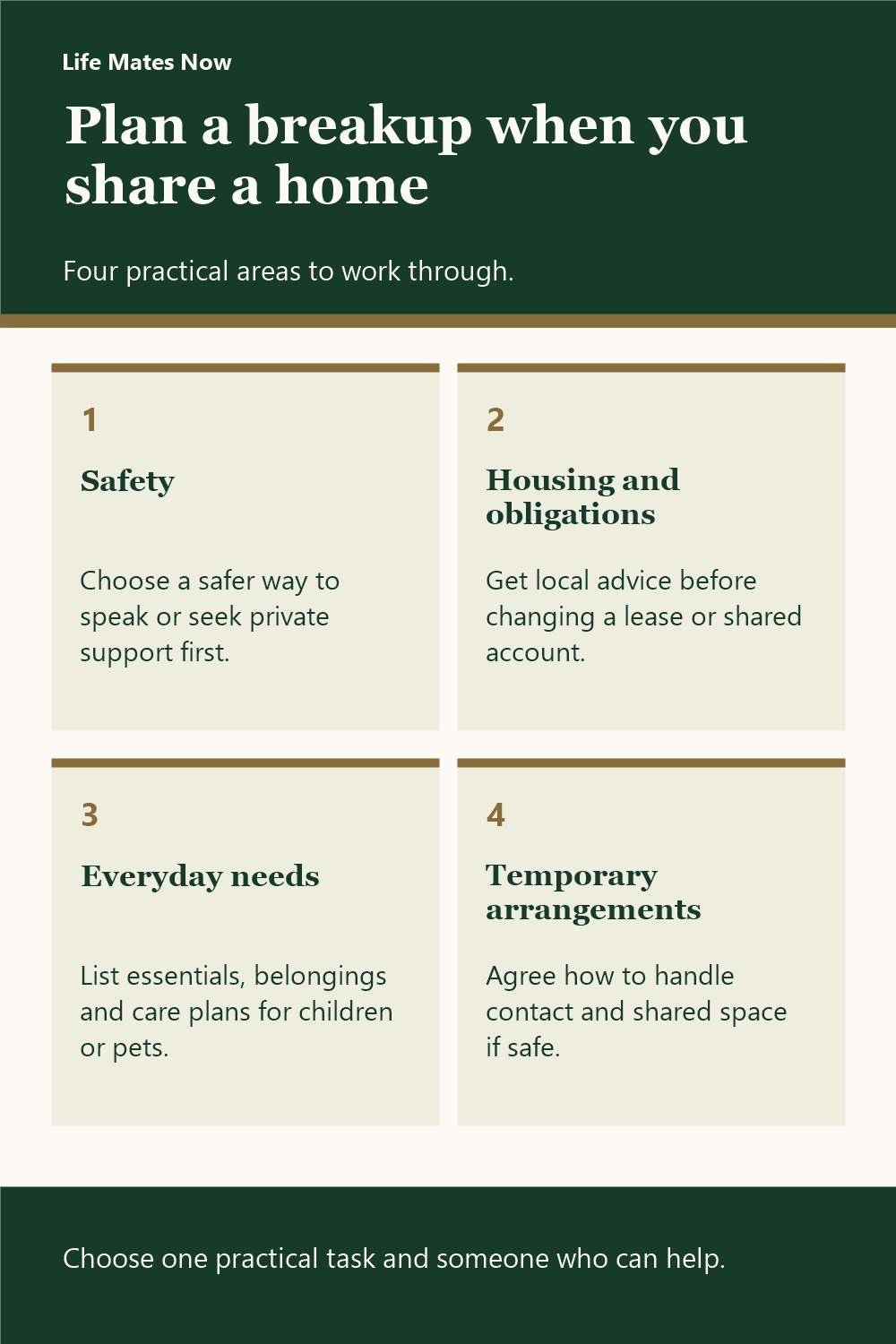
Read the infographic in text
Plan a breakup when you share a home Four practical areas to work through.
- Safety Choose a safer way to speak or seek private support first.
- Housing and obligations Get local advice before changing a lease or shared account.
- Everyday needs List essentials, belongings and care plans for children or pets.
- Temporary arrangements Agree how to handle contact and shared space if safe.
Choose one practical task and someone who can help.