

When someone you love does not want the same relationship, it can be painful to take in. You may feel disappointed, angry, relieved, confused or several things at once. You do not have to turn the experience into a positive lesson before you can begin looking after yourself.
The other person’s answer matters, and so do your feelings and boundaries. These six approaches focus on what you can choose next, without promising a quick recovery or asking you to persuade someone to return your love.
1. Respect the answer without making it a verdict on you
A person can decline a relationship without proving that you are unlovable or that they are a bad person. If their answer is clear, accept it. Repeated messages, gifts, surprise visits or asking friends to intervene can put pressure on them and keep you tied to trying to change the outcome.
If you genuinely do not understand what was said, you can ask a brief clarifying question when contact is welcome. Once you know their answer, you do not need to agree with their reasons to respect the boundary. A meaningful connection or a strong hope does not create an obligation for the other person to continue.
2. Leave room for feelings without a recovery deadline
You may miss the person, the routine you shared or the future you imagined. Feelings can return even after a calmer day. That does not mean you are handling the situation incorrectly, and you do not have to follow a fixed sequence of grief stages.
Choose a way of expressing what you feel that does not require a response from the person who rejected you. Talking privately with someone you trust, writing a note you keep for yourself or having a quiet evening may suit you. Gratitude, forgiveness and a new relationship are not tasks you must complete to prove you have moved on.
3. Make contact workable for your circumstances
Some people prefer a period without contact; others need practical communication because they share work, friends, children or belongings. Decide what is necessary and what you can comfortably manage. If the other person has asked for no contact, respect that request rather than treating a boundary of your own as a reason to reopen discussion.
You might mute updates, pause a friendship or use one agreed channel for arrangements. Explain a limit briefly if needed: “I need some time away from social plans together.” You do not owe immediate friendship or ongoing emotional support. If contact involves threats or harassment, seek support with safety and boundaries.
4. Separate what happened from the story you fear
“They do not want to date me” describes an answer. “Nobody will ever want me” turns that answer into a prediction. When your thoughts move toward broad conclusions, try returning to what you actually know and what remains uncertain.
You can reflect on an experience without searching endlessly for the one message or mistake that would have changed everything. If reviewing old conversations leaves you more distressed, consider taking a break from them and choosing a small task for the present. You do not need a complete explanation from the other person before making your next decision.

5. Ask for the kind of support you want
Let a trusted person know what would help: “Could we have dinner without analysing the breakup?” or “I would like you to listen for a few minutes.” Ask them not to contact the other person on your behalf. Support can include company, a practical task or an ordinary activity that has nothing to do with dating.
Keep the options realistic for your energy, budget and access needs. A short call, a familiar film or time outside may be enough for one day. Solitude can also be welcome; you do not have to keep busy continuously. If being alone is making things harder, consider arranging a small point of contact with someone you trust.
6. Get further help and choose your own pace
If distress is affecting sleep, work, eating or your ability to manage daily life, consider talking with a qualified counsellor or healthcare professional. You can ask for help without showing that the experience was severe enough. Our guide to manageable steps and anxiety support offers further options when anxiety is part of what you are experiencing.
There is no requirement to date again quickly or to become stronger because of rejection. When you consider a new connection, focus on whether you want it and whether it feels mutual and respectful. Your next chapter can also involve friendship, familiar interests, rest or decisions that have nothing to do with finding a partner.
Read the infographic in text
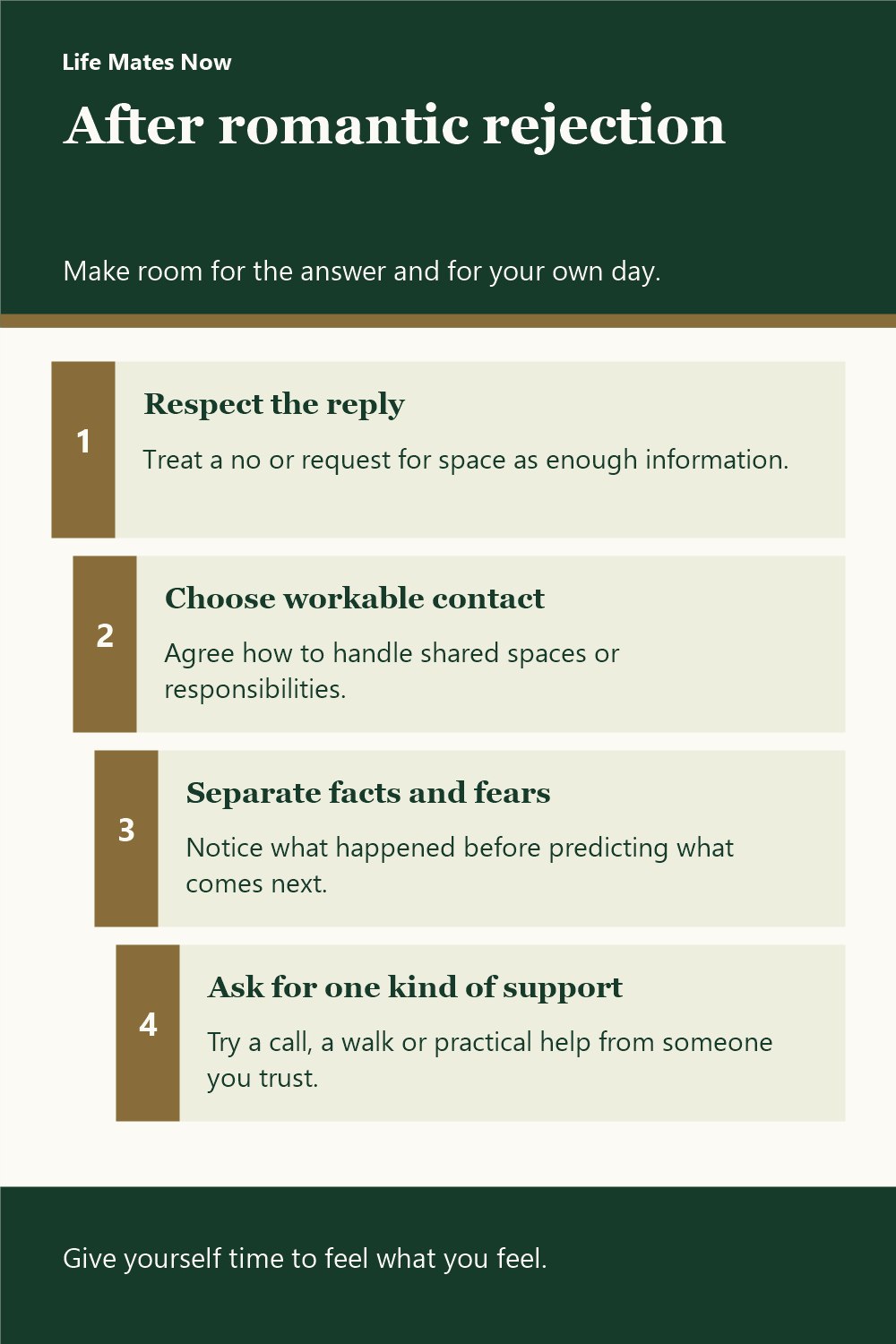
After romantic rejection Make room for the answer and for your own day.
- Respect the reply Treat a no or request for space as enough information.
- Choose workable contact Agree how to handle shared spaces or responsibilities.
- Separate facts and fears Notice what happened before predicting what comes next.
- Ask for one kind of support Try a call, a walk or practical help from someone you trust.
Give yourself time to feel what you feel.