

After hurting someone, you may want to put things right quickly. Repair can involve an apology, practical changes and time, but the other person decides whether they want contact or a continuing relationship. There is no phrase or sequence of steps that guarantees reconciliation.
These five steps focus on actions within your control. Take responsibility for what you actually did without assuming that every problem in the relationship is your fault. If someone is threatening or harming you, protecting yourself takes priority over trying to mend the bond.
1. Give a specific apology without bargaining
Describe your action, acknowledge its effect and say that you are sorry. “I shared something you told me privately. That broke the confidence you placed in me, and I am sorry” is clearer than “I am sorry if you were upset.” Keep the focus on the behaviour rather than asking the other person to reassure you that you are good.
There may be context worth discussing later, but explanations should not cancel responsibility. Avoid attaching a demand for forgiveness or a complaint about how long the hurt has lasted. If the person has asked for no contact, do not use an apology as a reason to bypass that boundary through friends, new accounts or an unexpected visit.

2. Offer practical amends with reasonable limits
Think about what can actually be repaired. If you missed an agreed responsibility, take steps to complete it or address the consequence. If you shared private information, stop sharing it and consider whether a correction or request to remove it is possible. Some effects cannot be undone, so be honest about the limits.
Offer a concrete action rather than making the hurt person design the entire solution: “I can correct what I told them and stop discussing your situation. Would that help?” Listen to their preferences without promising anything they ask. Repair does not require giving up privacy, accepting humiliation, spending money you cannot afford or agreeing to unwanted intimacy.
3. Respect space and an answer you may not want
The other person may want to talk now, ask for time or decide the relationship cannot continue. You can ask once what contact, if any, would be welcome. If they say they need space, agree on any necessary practical arrangements and honour the request. A deadline for forgiveness usually creates pressure rather than understanding.
You can also set your own limits about how you communicate. If a conversation becomes insulting or overwhelming, suggest a pause rather than continuing an argument. Where you share children, housing or other responsibilities, keep necessary messages focused on those arrangements. An apology does not purchase renewed closeness, and declining reconciliation does not make the other person cruel.
4. Understand the pattern without excusing it
Reflect on the decisions leading up to the hurt. What did you avoid saying, assume, overlook or do despite knowing the likely effect? Choose a practical alternative for a similar situation: check before sharing a story, ask for a break before raising your voice, or say directly that you cannot keep a commitment.
Stress or a health difficulty may be relevant context, but you do not need to diagnose yourself or your partner to take responsibility. If a recurring behaviour is difficult to change, consider appropriate individual support. Keep your reflection separate from the other person’s response; they should not have to resume the relationship to help you make progress.
5. Follow through and let both people choose the future
Make changes you can maintain, rather than a dramatic promise that nothing difficult will ever happen again. Agree on a small, observable next step if you both want to continue: a clearer plan for household responsibilities, a way to flag changed arrangements or a time to discuss an unresolved issue. Check whether the change addresses the original concern.
Trust may return slowly, remain uncertain or not return. If you repeat the behaviour, acknowledge it and reconsider what needs to change instead of asking for automatic patience. Both people can decide whether the relationship remains workable. For a wider look at patterns and possible support, see Is Your Marriage Struggling? Making amends can still matter when a relationship ends.
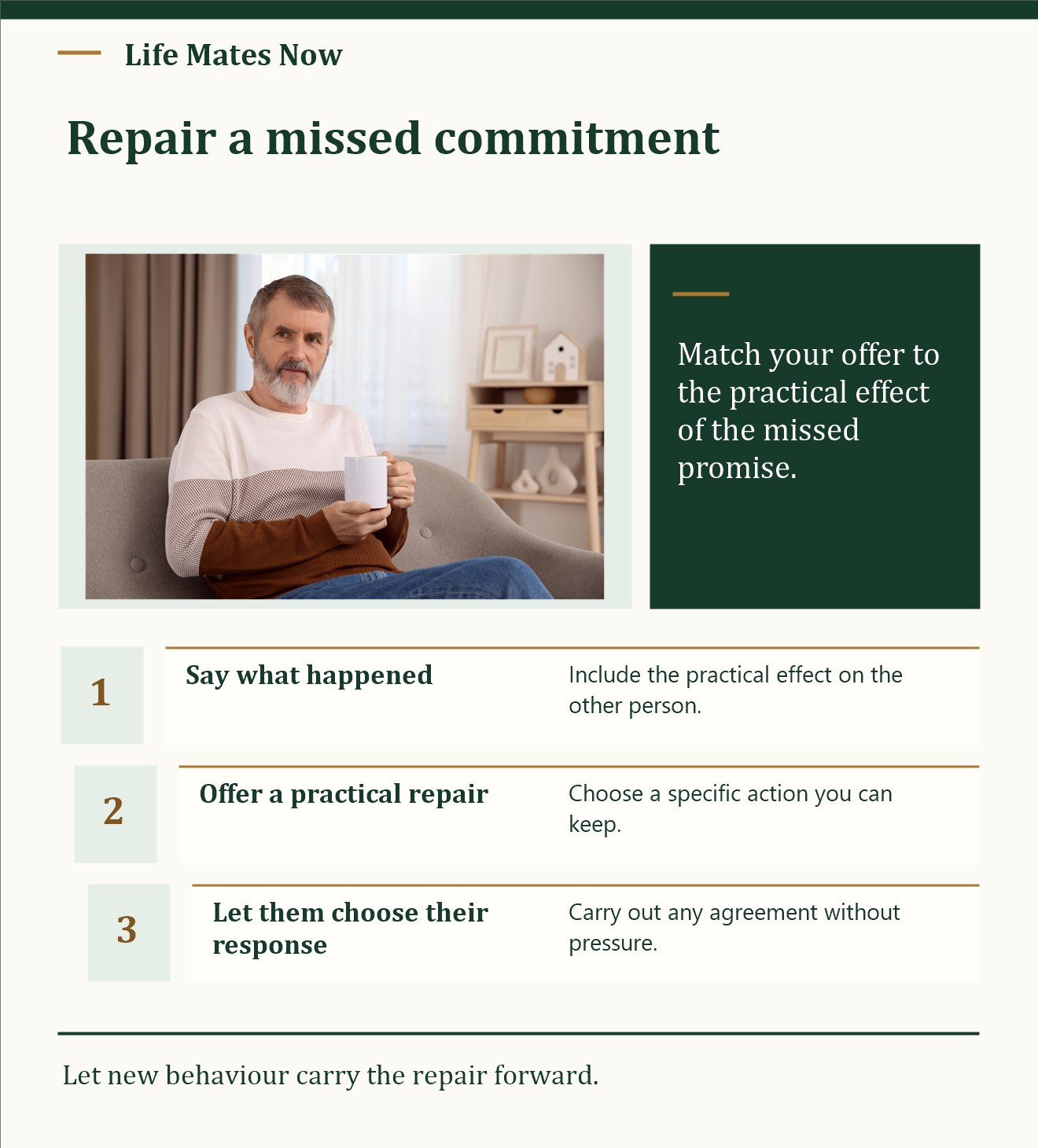
Make the repair fit the inconvenience you caused
Suppose you made a promise to handle a shared errand and the other person had to leave work early to cover it. Acknowledge what happened, ask what would help and offer an action within your control. You might take the next errand and set a reminder so the same problem is less likely to recur.
If they need space, respect that and follow through on any agreed repair. Give them room to decide when they want to talk about what happens to the relationship.
Read the infographic in text
Repair a missed commitment
Match your offer to the practical effect of the missed promise.
- Say what happened Include the practical effect on the other person.
- Offer a practical repair Choose a specific action you can keep.
- Let them choose their response Carry out any agreement without pressure.
Let new behaviour carry the repair forward.