

Feeling unsure about someone’s intentions can make dating exhausting. You may wonder whether their interest is sincere or whether you are being used. A label such as “player” can express that fear, but it cannot tell you what another person is thinking.
Look at observable behaviour and what you need from the connection. You can ask a question, slow the pace or stop dating without proving a hidden motive.

Let early promises meet time and follow-through
Talk about a future together can feel exciting. Notice whether it comes with realistic plans and respect for the pace you want. A promise made early is still a promise, rather than evidence of commitment.
You can respond, “That sounds lovely, but I’d like to get to know each other before making big plans.” Someone’s enthusiasm does not require you to move in, become exclusive or make a financial commitment before you are ready.
Look for mutual curiosity without using sex as a test
Notice whether conversations leave room for your views, interests and everyday circumstances. Do they ask, listen and remember what matters to you? Do you feel free to be tired, quiet or uncertain without having to perform?
Wanting sex does not automatically mean someone is dishonest, and waiting to have sex cannot guarantee commitment. What matters is clear consent, honest expectations and respect for your answer. You do not owe intimacy to find out whether someone will stay interested.
Discuss a pattern instead of decoding every message
Contact can change for many reasons, including work, health, caring responsibilities or a different preference for messaging. A delayed reply alone does not establish manipulation. Repeated unexplained cancellations or disappearing whenever you raise a concern may still make the connection unsuitable for you.
Try, “Our plans have fallen through several times. Are you interested in arranging a date you can keep?” You can consider their answer alongside what happens next rather than continuing to investigate every gap.
Be clear about the relationship each person wants
Ask about exclusivity, casual dating, sexual boundaries or other expectations that matter to your decision. “What are you looking for at the moment?” can open a conversation, but revisit it if the arrangement changes.
A casual or nonexclusive connection is not inherently less respectful than a committed partnership. The problem is deception, pressure or an arrangement you do not want. If your goals differ, neither person has to persuade the other to change.
Notice what happens when you set a limit
A useful boundary describes your choice: “I’m not sharing intimate pictures” or “I can’t meet at short notice.” You do not have to turn it into a test or an elaborate explanation.
Notice whether the person accepts the limit, asks a respectful question or pressures you through guilt, anger or repeated requests. You may step back after a single interaction that leaves you uncomfortable; there is no minimum number of incidents you must tolerate.
Keep money and private information protected
Pause if a new online love interest asks for money, gift cards, transfers or cryptocurrency, particularly when the request is urgent or secret. The US Federal Trade Commission explains common romance-scam patterns and advises against sending money to an online love interest.
Do not share account access or verification codes to demonstrate trust. If something seems wrong, stop the exchange and seek guidance from the platform or an appropriate consumer-protection service. Someone else’s deception would be their responsibility, not evidence that you were foolish to want connection.
Choose what is workable for you
You might decide to ask one direct question, keep dating at a slower pace or end contact. A brief message such as “This connection is not working for me, so I’m not continuing” can be enough when it is safe to send one.
You do not need certainty about someone’s intentions to know that your needs are not being met. If you feel threatened or controlled, consider support and a safer way to reduce contact rather than confronting the person alone.
Check a promise against a decision you can see
If someone says they want a long-term relationship and repeatedly avoids making an ordinary plan, ask what next week would realistically look like. You could say what time and pace you want. Give them room to tell you what they are available for now.
Pay attention to the answer and what follows. You can decide several days later whether that kind of contact is what you want to offer.
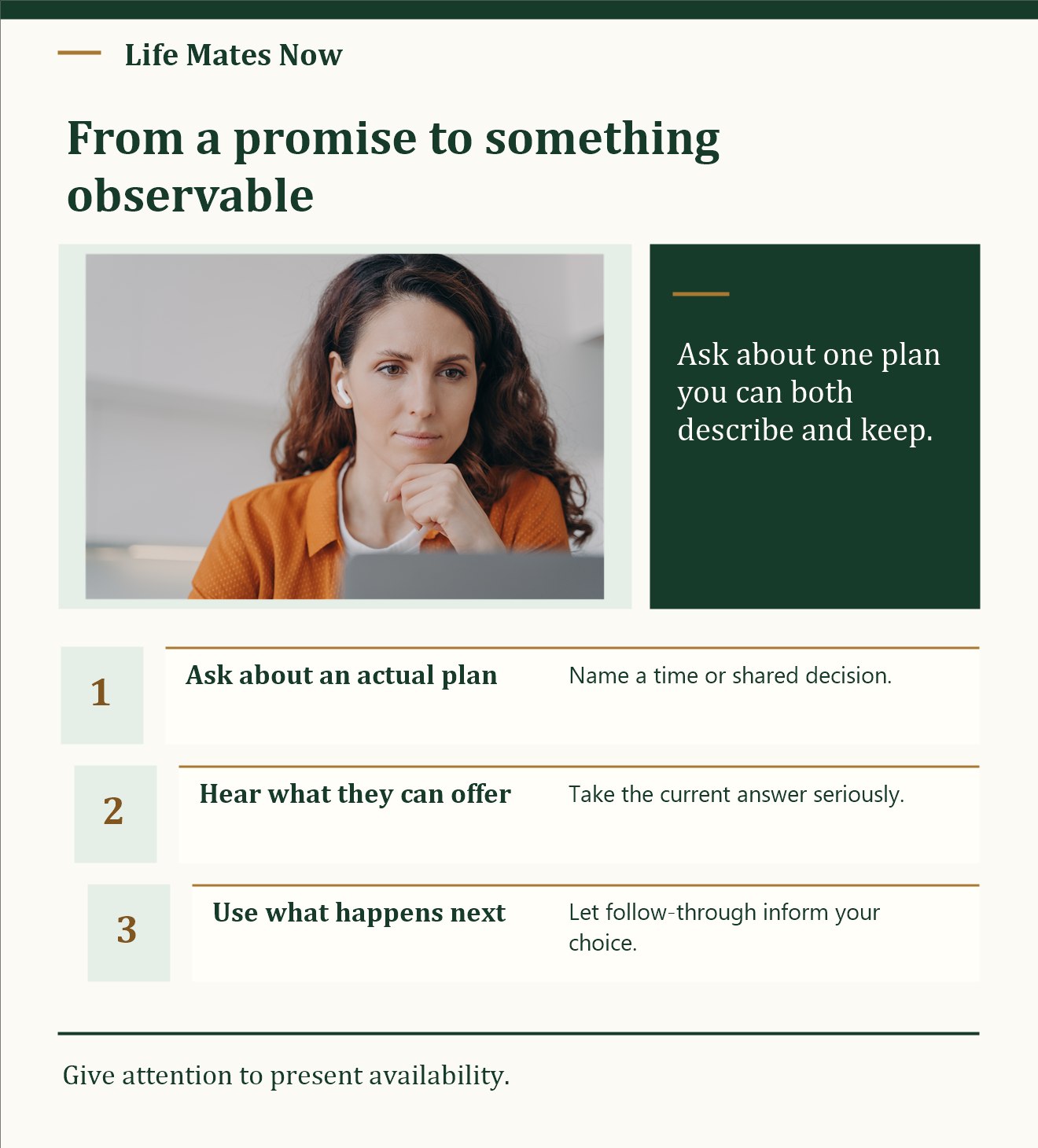
Read the infographic in text
From a promise to something observable
Ask about one plan you can both describe and keep.
- Ask about an actual plan Name a time or shared decision.
- Hear what they can offer Take the current answer seriously.
- Use what happens next Let follow-through inform your choice.
Give attention to present availability.