

Dating can be enjoyable, tiring, hopeful or uncertain, sometimes within the same week. Being single does not mean you have unlimited time, and wanting a relationship does not mean something is missing from your worth.
These nine tips offer choices you can adapt to your circumstances. They cannot guarantee a partner or prevent every disappointment, but they can help you make clearer decisions about the connections you want to explore.

1. Question assumptions without blaming your past
Ask which ideas about dating you actually agree with. Perhaps you feel you must find an instant spark, follow a particular timetable or stay because someone looks suitable on paper. Consider whether those ideas fit your current values and experience.
A difficult childhood or previous relationship does not make you defective or unfit to date. You can notice how past experiences affect you while choosing what support or pace would be useful now.
2. Separate core needs from flexible preferences
Write down what matters to your everyday life: honesty, respect for your boundaries, compatible relationship goals or a workable approach to money and responsibilities. Keep those needs distinct from preferences such as a shared hobby or a particular style.
You may choose to be flexible about a preference. You do not need to lower standards around consent, safety or dignity to give someone a chance. Someone can be a decent person and still want a different life from yours.
3. Set a pace your life can hold
Consider the time, energy and money you want to spend on dating alongside work, caring responsibilities, friendships, health and rest. That balance will look different for different people. Shorter dates, accessible venues or fewer app conversations may suit you better.
You can pause dating without treating the pause as failure. Try a clear limit such as checking messages once in the evening or planning one date rather than filling every free hour.
4. Build connection through mutual curiosity
Ask questions that invite a real answer: “What do you enjoy doing when you have a free afternoon?” or “What kind of relationship are you looking for?” Share enough of your own answer that the conversation can move both ways.
Notice whether they also ask, listen and follow through on plans. You do not have to carry every exchange or turn an early date into an interview. If you are unsure what someone means, ask rather than filling the gap with a hopeful interpretation.
5. Make room for enjoyment without performing
Choose a setting where you can talk, leave easily and stay within your budget. A walk in a suitable public place or a short café visit can be enough. Agree on a plan rather than assuming both people enjoy the same activities.
You do not have to be constantly cheerful, outgoing or entertaining to deserve connection. Quietness, nerves, disability or a low-energy day do not make someone a poor partner. Look for comfort and interest that can be expressed honestly.
6. Treat rejection as an answer
If someone declines a date or says they do not want to continue, accept it without bargaining, repeated messages or requests for friends to intervene. You can feel hurt and still respect their decision. If you are declining, a brief “Thank you, but I don’t want to take this further” can be clear enough.
Give yourself time after disappointment. There is no need to prove your worth by finding another date immediately, and no one can promise when a mutual connection will arrive.
7. Pay attention to specific behaviour
Notice pressure around sex, threats, monitoring, attempts to isolate you, controlling access to money or repeated disregard for a stated limit. You do not need to collect enough evidence to justify declining another date.
A friend or relative simply disliking your date is not proof of abuse. Ask what behaviour they have noticed and consider it alongside your experience. If you feel afraid, seek private support and think about a safer way to reduce contact rather than feeling obliged to confront the person alone.
8. Let trust develop through actions
Look for honesty, consistent plans, respect for privacy and a willingness to acknowledge mistakes. Trust can grow gradually as you see how someone behaves. It is not a test you must pass by sharing passwords, accepting unwanted intimacy or ignoring discomfort.
If previous harm makes dating difficult, support is available without making you responsible for someone else’s impatience. You can explain a boundary without disclosing your whole history. A respectful person can decide whether the pace suits them while leaving your choice intact.
9. Follow through and check in
As you get to know each other, discuss practical expectations: contact between dates, exclusivity, sexual boundaries and how to raise a concern. Use a specific request, such as “Could we confirm our plans the day before?” rather than expecting someone to infer what you need.
Misunderstandings can still happen. Notice whether both people are willing to listen, make a repair and change repeated hurtful behaviour. The NHS guide to healthy relationships offers more on listening, boundaries and seeking support. You can keep learning about a connection while remaining free to end it.
Make a first plan that protects two people’s time
If you meet through a shared interest, suggest a short activity with a clear end time. When the other person says they can only do a different day, take that as a scheduling answer and see whether there’s a time you both want.
If you’re meeting someone from a dating app, decide what personal details you want to keep private and arrange your own way home. You can choose another plan based on what you learn from the first one.
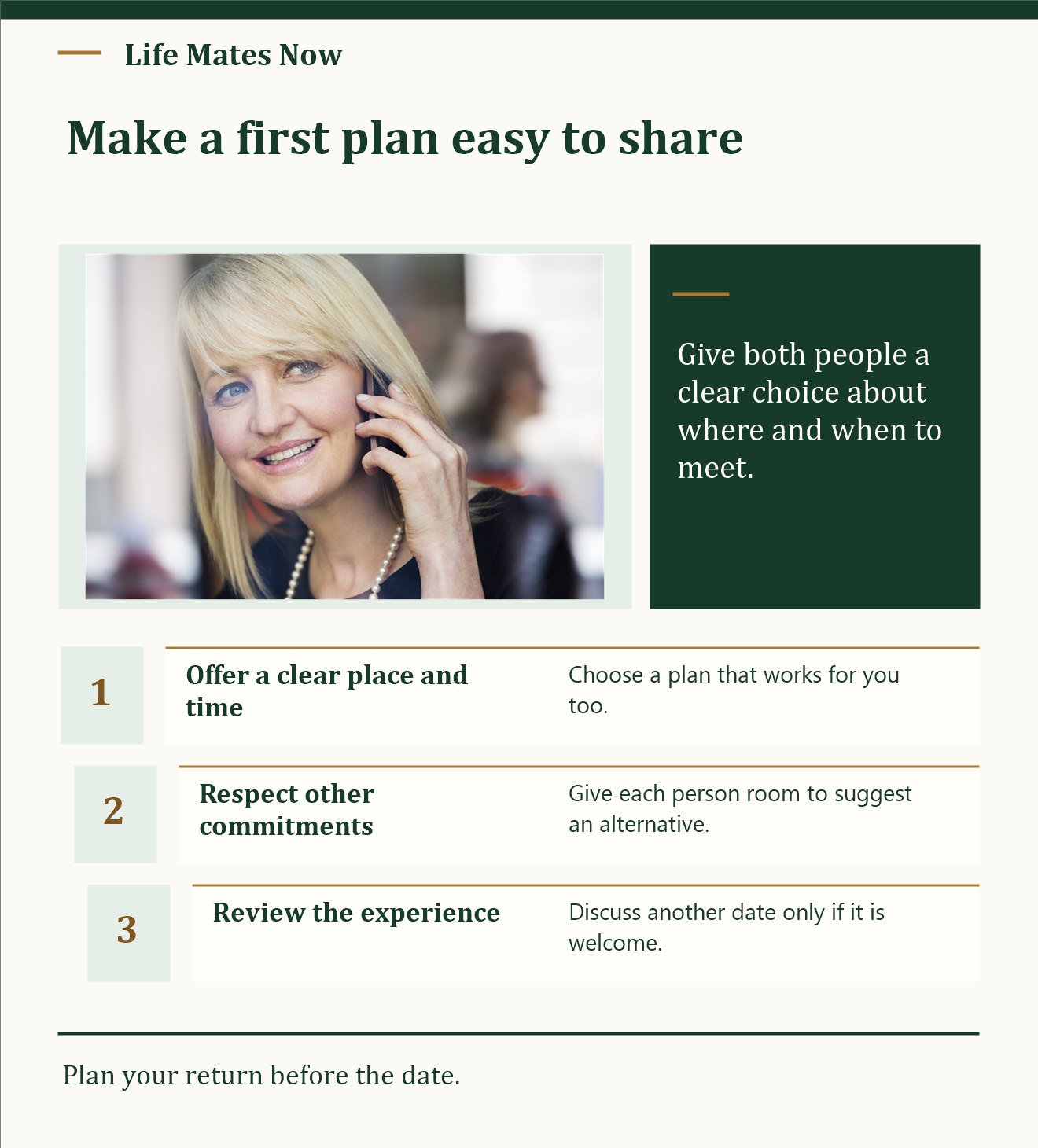
Read the infographic in text
Make a first plan easy to share
Give both people a clear choice about where and when to meet.
- Offer a clear place and time Choose a plan that works for you too.
- Respect other commitments Give each person room to suggest an alternative.
- Review the experience Discuss another date only if it is welcome.
Plan your return before the date.