

If you are considering dating after years away, you may have questions about where to meet people, what to say and how much change you want in your life. You can be curious and uncertain at the same time.
Later-life dating does not have one timetable or destination. You may want companionship, romance, sex, a committed partnership or simply a chance to learn what feels right. These nine starting points can help you explore without treating a relationship as a test of success.
1. Be clear about what you want now
Consider the kind of connection you would enjoy and what you are not looking for. You may want a regular companion while keeping separate homes, or prefer a long-term partnership. Your answer does not need to match what friends or relatives expect.
Share relevant expectations as you get to know someone, and invite their answer too. You can revise your preferences, but avoid agreeing to an arrangement you already know you do not want just to keep the conversation going.

2. Choose ways to meet that fit your life
Options might include an interest group, an introduction, an online community or a dating app. Choose something you can access and would be comfortable trying. Leaving home frequently is not a requirement for being open to connection.
Consider transport, mobility, energy, budget and privacy before committing to a plan. A smaller group or an initial phone conversation may feel more manageable than a busy event. You do not have to adopt every new dating habit at once.
3. Give a conversation room without owing another date
A first conversation may feel awkward when you are out of practice. If you are interested and comfortable, you can allow time to learn more rather than expecting instant certainty. Attraction and compatibility do not have to announce themselves immediately.
You are equally free to decline another meeting. Age does not create a duty to lower your standards or give someone repeated chances. Be considerate in your response while remaining clear about what you want.
4. Value friendship on its own terms
A meeting may lead to a friendship rather than romance, and that can be worthwhile if both people want it. Neither person needs to accept friendship as a condition of ending romantic interest, or keep it going in the hope of changing the other’s mind.
Ask yourself whether the contact feels welcome in its own right. Existing friendships and community ties can remain important while you date, take a break or decide that being single suits you.
5. Ask trusted people for the help you actually want
You could tell a friend that you would welcome an introduction, company at an event or help understanding an app. Be specific about what may be shared. An introduction does not need to include private health, family or financial details.
You can also choose to keep dating separate from relatives or community groups. Support should make room for your decisions, rather than turn every conversation into a progress report or a demand to meet someone.
6. Plan early meetings with choice and privacy
If you decide to meet someone new, choose a place and duration you feel comfortable with. Consider a public setting, your own travel arrangements and a way to leave when you want. You may wish to tell someone you trust about the plan.
Share personal details gradually. You do not need to provide your home address, daily routine or family information to prove that you are serious. Any practical precaution can reduce some risks; it cannot guarantee another person’s behaviour.
7. Keep money separate from an online romance
Be cautious about urgent requests for money, gifts or financial access, even when the conversation feels close. A photograph, affectionate messages or a promised visit cannot establish that a profile or story is genuine.
The Federal Trade Commission’s romance-scam guidance advises against sending money to an online love interest, including through gift cards, wire transfers or cryptocurrency. You can stop the conversation and seek a trusted outside perspective without first proving the person is dishonest.
8. Let confidence grow alongside action
You do not need to feel completely confident before you are worthy of interest or respect. Prepare one or two questions, choose a manageable first step and allow yourself to be new to the situation.
You can talk about your present interests without hiding an important part of your life. You also do not owe a stranger a full account of a divorce, bereavement or past relationship. Share at a pace that suits the developing trust between you.
9. Review what works and allow yourself a break
After a meeting, consider whether you felt comfortable, listened to and interested. A pleasant evening need not become a relationship to have been worthwhile. If someone does not continue contact, you may not learn exactly why.
Notice what you want to repeat or change, then choose your next step. You can try again, use a different approach or pause. None of those choices predicts your future or makes your present life less valuable.
Choose an introduction that gives both people independence
If a friend offers to introduce you to someone, suggest meeting at a place you can reach comfortably and with your own way home. Tell your friend what information you’re happy for them to share. You can choose how much to say about family, health or money when you meet.
If you’d like another outing, say so and decide together what would be enjoyable. Give your regular plans and your pace a place in that decision.
Read the infographic in text
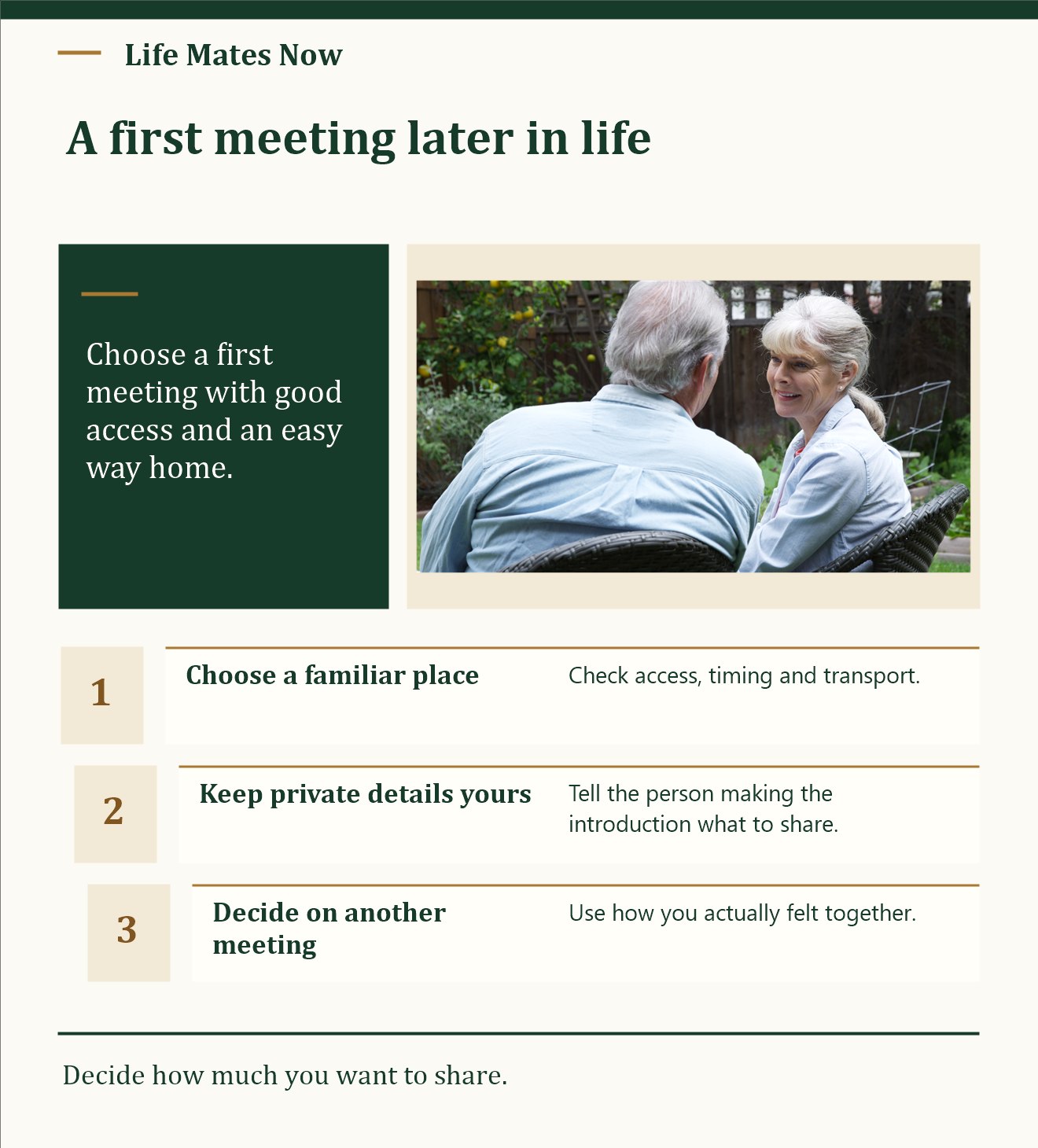
A first meeting later in life
Choose a first meeting with good access and an easy way home.
- Choose a familiar place Check access, timing and transport.
- Keep private details yours Tell the person making the introduction what to share.
- Decide on another meeting Use how you actually felt together.
Decide how much you want to share.