

No checklist can tell you that you will be single forever. Enjoying time alone, wanting privacy or not feeling ready to date does not make you defective. Being single can be a preference, a circumstance or a mixture of both.
If you want a different kind of connection, consider what is within your influence now. These twelve questions offer starting points without promising a partner or asking you to accept a relationship you do not want.
1. Do you want to date, or feel expected to?
Separate your own wish from questions, comparisons or pressure from other people. You may want romance, companionship or neither right now. You can keep that answer private or explain it briefly without defending your worth.
If you are unsure, you do not need to settle the question permanently. Consider whether one small conversation or a pause would give you more room to think.
2. Which expectations protect what matters to you?
Respect, consent and compatible relationship goals are reasonable things to want. Other preferences may be more flexible, such as an imagined job, appearance or exact list of shared hobbies.
Distinguish a preference you are curious about revisiting from a boundary you do not want to change. Dating more people is not a reason to accept disrespect.
3. Are the opportunities you have a good fit?
A particular app, event or social circle may not suit you. That does not establish that you are unsuitable for a relationship. Consider where people with relevant interests or relationship goals might meet.
Choose an option that fits your access, energy and budget. An online group or an introduction can be a starting point without requiring a busy social schedule.
4. What would make a first step manageable?
You might prefer a short exchange, a phone call or a brief public meeting. Decide what would let you take part without feeling committed to a whole evening or a second date.
Preparation can be simple: one question, a travel plan or a clear finishing time. You can change the plan if the contact does not feel welcome.
5. Are you predicting the next date from the last one?
A disappointing experience may affect what you expect. You can take that concern seriously while asking what is actually known about this person and this situation.
You do not have to force optimism or ignore a concern. Consider what information, boundary or support would help you decide whether you want to continue.
6. What privacy and personal space do you want?
Wanting your own bed, home, routine or time alone does not rule out a relationship. People can discuss different living arrangements and levels of contact.
Rather than assuming that closeness requires sharing everything, consider what you would enjoy and what you want to keep separate. Compatibility includes how both people respond to those preferences.
7. Which connections already matter to you?
Friendships, community ties and chosen family can be important whether or not you date. Spending time with a friend and their partner does not make you a failed extra person.
If you want more invitations or different company, you could ask for a plan that suits you. A smaller social circle is not evidence that you are unlikable.
8. What contact with your ex serves your life now?
Missing an ex or noticing their updates does not predict lifelong singleness. Consider whether the contact you choose makes it harder to maintain a boundary or attend to your present needs.
You might mute updates, limit personal messages or keep contact focused on shared responsibilities. You do not need to appear fully recovered before caring for yourself.
9. Are comparisons giving you useful information?
A past relationship may clarify a need, such as reliability or affection. It can also become a fixed template that makes it difficult to notice the person in front of you.
Ask which quality you value and how it might appear differently. You can learn from the past without excusing past harm or demanding an exact replacement.
10. Is the pace working for both people?
Strong feelings can arise quickly. You can enjoy them while checking what each person wants and allowing time to learn more. Neither person owes a faster commitment because the other feels certain.
Consider a specific conversation about contact or expectations rather than treating speed as a test of sincerity.
11. Is interest being freely returned?
Pay attention to a clear refusal, an ended relationship or a request for no contact. Repeated messages, waiting outside someone’s workplace or asking friends to persuade them can cross a boundary.
You can feel disappointed and still stop pursuing contact. You can also step back from vague or inconsistent interest without waiting for a final explanation.
12. What is one useful choice for this week?
Choose something concrete: revisit a preference, ask for an introduction, protect time for an interest or take a break from dating. It does not need to lead to a relationship to be useful.
If worry about your future is taking over, consider talking with someone you trust or a counsellor. Your life can contain meaningful choices and connections while the future remains uncertain.
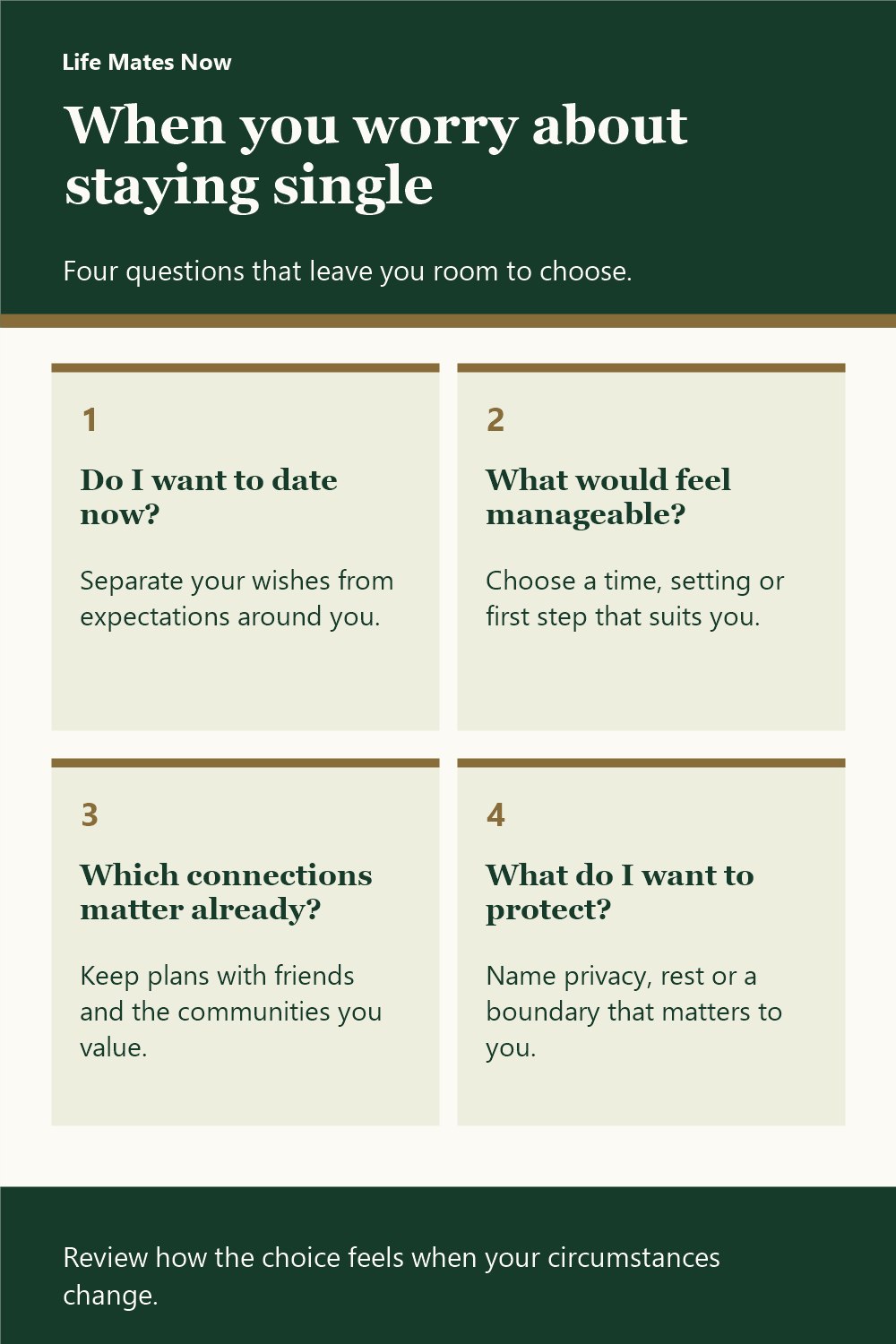
Read the infographic in text
When you worry about staying single Four questions that leave you room to choose.
- Do I want to date now? Separate your wishes from expectations around you.
- What would feel manageable? Choose a time, setting or first step that suits you.
- Which connections matter already? Keep plans with friends and the communities you value.
- What do I want to protect? Name privacy, rest or a boundary that matters to you.
Review how the choice feels when your circumstances change.