

There is no formula that can tell you when you will feel over an ex. The length of the relationship, who ended it or how you appear to other people cannot supply a personal deadline. You may feel several things at once, including sadness, relief, anger or uncertainty.
Rather than measuring yourself against a number of weeks or months, consider what would make the present day more manageable. You can take practical steps while allowing feelings to change at their own pace.
Leave the recovery formula behind
Rules such as “half the length of the relationship” can make an uneven experience feel like a test you are failing. A short relationship can matter deeply, and a long relationship can end with a mixture of grief and relief. Neither response needs to be defended.
You do not need to stop caring about every memory before you can make choices for your own life. Feeling better in one area does not require all the others to be settled.
Name what has changed in your everyday life
You may miss the person, shared routines, a home, mutual friends or the future you imagined. Some losses are emotional; others create immediate tasks. Separating those needs can help you choose useful support.
For example, missing evening company might call for a regular check-in with a friend. A difficult housing arrangement may need practical advice. Wanting an explanation from your ex is understandable, but they may not provide an answer that resolves every feeling.
Choose contact that fits your circumstances
Consider whether messages, social updates or unplanned meetings make it harder to keep a boundary you want. You might mute updates, stop intimate conversations or take a break from personal contact.
If you share children, work or other responsibilities, complete separation may not be realistic. A specific channel, agreed topic or predictable time for practical messages can be more workable. If you feel threatened or monitored, consider specialist support before changing arrangements or confronting the person.
Make the basic parts of the day manageable
Start with a small need: something to eat, a place to rest, an important task or a little company. You can simplify a routine or ask for practical help rather than trying to rebuild everything at once.
Choose activities that suit your energy, access and budget. A trip, makeover, new hobby or exercise plan is optional. You do not need an expensive or permanent change to prove you are moving forward.
Make room for an interest that belongs to you
Consider something you enjoy, miss or want to try without turning it into a new identity project. You might return to music, spend time outdoors, make something or reconnect with a person you have not seen for a while.
Keep the step small enough to stop or adapt if it does not suit you. You are allowed to be curious without needing the activity to distract you constantly or lead to a new relationship.
Notice changes without demanding a steady upward line
A reminder, anniversary or unexpected message can bring feelings back. That does not erase the choices you have already made. You may still notice more room to concentrate, make a plan, enjoy company or leave a message unanswered.
Ask, “What was a little more workable this week?” alongside “What still needs support?” You do not have to turn the breakup into a lesson, feel grateful for harm or date again by a deadline.
Add support when you need it
Talk with someone you trust about the kind of help you want: listening, company or help with a practical task. You can ask for support without deciding whether your breakup was serious enough to deserve it.
If distress, changes in sleep, difficulty concentrating or other concerns are interfering with daily life, consider speaking with a healthcare professional. The National Institute of Mental Health explains ways to care for mental health and seek help. You do not have to wait for a supposed breakup deadline before asking.
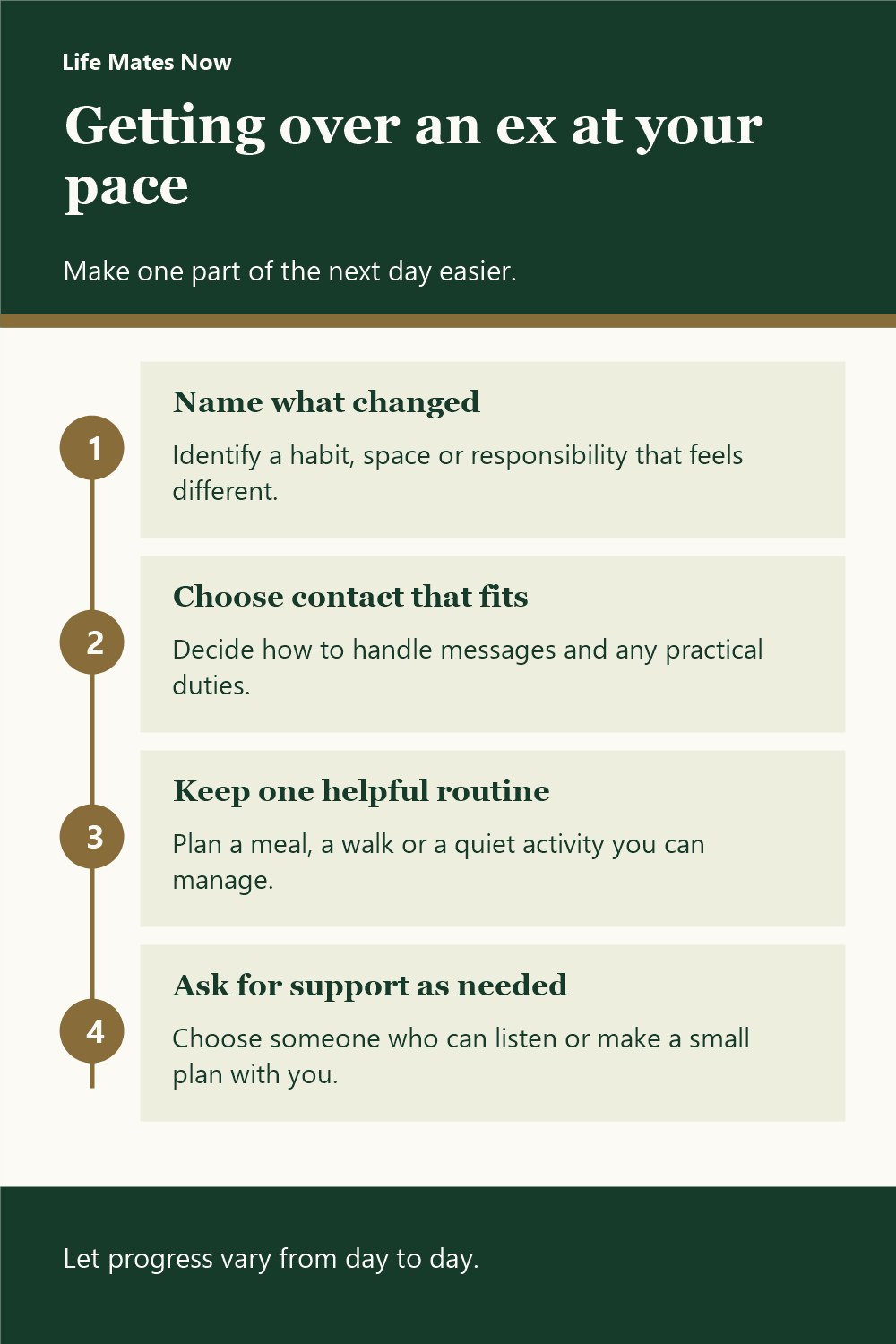
Read the infographic in text
Getting over an ex at your pace Make one part of the next day easier.
- Name what changed Identify a habit, space or responsibility that feels different.
- Choose contact that fits Decide how to handle messages and any practical duties.
- Keep one helpful routine Plan a meal, a walk or a quiet activity you can manage.
- Ask for support as needed Choose someone who can listen or make a small plan with you.
Let progress vary from day to day.