

Calling someone your soul mate can express a profound sense of connection. For some people it carries a spiritual meaning; for others it describes being deeply understood. You can value that experience without knowing how long the relationship will last.
Terms such as soul mate, heart mate and life mate do not have one meaning everyone shares. The useful question is what the words mean to you and whether the relationship, as it is now, supports both people’s choices and wellbeing.

What you mean by “soul mate”
You might use the term for a romantic partner, a close friend or someone who has influenced your life. If you believe the connection has a spiritual purpose, consider how that belief helps you reflect on your own values and actions.
A powerful feeling does not establish that another person shares your interpretation or wants a relationship. You can ask what the connection means to them without requiring them to agree with a label that matters to you.
What “heart mate” or “life mate” means to you
Some people use these words for a partner with whom they hope to build a settled life. Others use them interchangeably with soul mate. Clarify the practical hopes behind the phrase: companionship, commitment, affection, a shared home or something else.
No label guarantees that someone will always make you happy, never cause doubt or meet every need. A lasting partnership still leaves room for separate interests, changing circumstances and honest disagreement.
Look at the relationship beyond the label
Notice consent, respect for boundaries, honesty and whether actions match agreements. Can you raise a concern? Do both people make decisions about their own lives? Are responsibilities and choices discussed rather than assumed?
A spiritual interpretation does not require you to accept control or mistreatment as a lesson. You can learn from an experience without deciding that the harm was necessary, deserved or destined to produce joy.
Make room for fear without letting it settle every question
You might fear losing a meaningful connection, choosing wrongly or being alone. Those feelings deserve care, but they cannot by themselves tell you whether to stay or leave.
Ask what the fear concerns: a real threat, a practical difficulty, uncertainty about the future or a painful memory. Consider support that fits that concern. If you are afraid of the other person, prioritise safety rather than treating the fear as evidence of intense attraction.
Discuss commitment in ordinary, concrete terms
If both people want a relationship, talk about the choices that would support it: contact, exclusivity, money, caring responsibilities or plans for where to live. You can begin with one question rather than deciding an entire future at once.
For example: “When you say life partner, what would that mean in our everyday lives?” Listen for an answer you can understand and a plan both people choose. A promise of forever is different from consistent care in the present.
If the connection changes or ends
A relationship can have mattered even if it does not continue. An ending does not prove that you failed a spiritual test or lost your only chance of being loved. Equally, no one can promise when another relationship will arrive.
You may feel sadness, anger, relief or several things together. You do not have to force gratitude or forgive by a deadline. Consider what contact, practical arrangements and support would help you navigate the change now.
Choose a next step that respects both people
Write down one thing you value about the connection, one question you need answered and one boundary you want to keep. A next step might be a conversation, a clearer agreement, time apart or asking someone you trust for support.
You can keep a meaningful belief about soul mates while remaining curious about the person in front of you. The label can express what you hope for; it cannot replace mutual consent, respectful behaviour or your freedom to choose.
Ask what a lasting bond would mean in ordinary life
If you think of someone as a soul mate and want to know whether they see a future together, choose one part of that future to discuss. You might ask whether they want to plan around a move, set aside time regularly or introduce one another to family.
Give the belief its place in the conversation and let both people describe what they would choose. A shared agreement can tell you which part of the future you can plan together now.
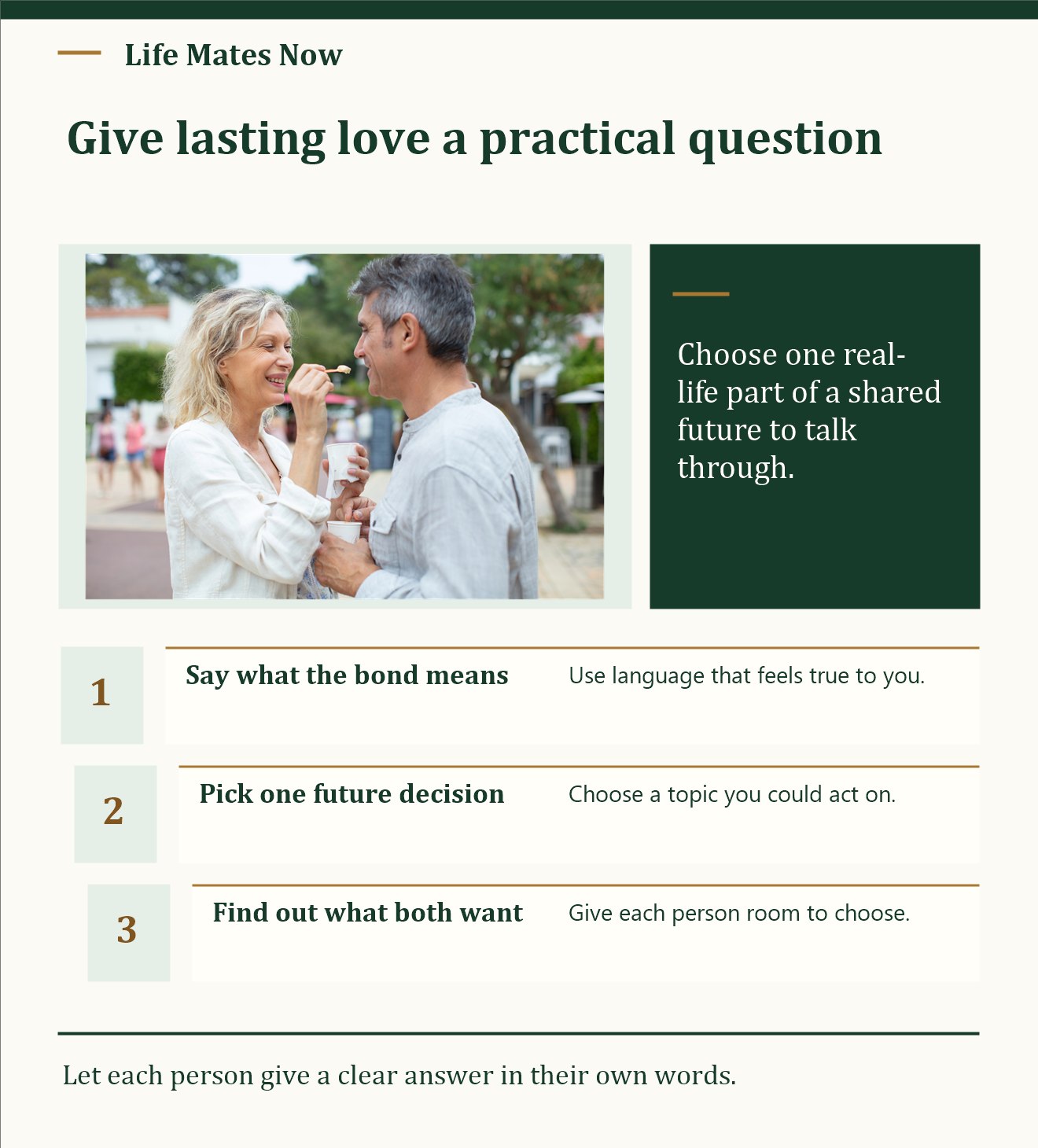
Read the infographic in text
Give lasting love a practical question
Choose one real-life part of a shared future to talk through.
- Say what the bond means Use language that feels true to you.
- Pick one future decision Choose a topic you could act on.
- Find out what both want Give each person room to choose.
Let each person give a clear answer in their own words.