

Caring deeply about someone can be a valued part of your life. The useful question is whether the relationship also leaves room for your needs, decisions and other sources of support. You do not have to become less loving to deserve respect.
If you feel stretched, overlooked or afraid, look at the specific pattern rather than blaming the size of your feelings. These questions can help you separate generous care from arrangements that are exhausting, unwanted or unsafe.

Keep responsibility for mistreatment in the right place
Loving someone intensely does not cause them to threaten, belittle, control or hurt you. The person choosing that behaviour remains responsible for it. Being available, affectionate or hopeful does not make you deserving of harm.
You may want to change a pattern of giving more than you can afford. That is a choice about your own needs, not an admission that you made another person mistreat you. You can seek help while still having complicated feelings about them.
Name one need that keeps getting postponed
Think about what has become difficult to fit into your day: rest, meals, healthcare, work, an interest, privacy or time with someone else. Choose one concrete example instead of deciding that you have failed at independence.
For example, you might want an evening without non-urgent messages or time to finish a task before helping. Consider what is within your control and what needs a practical discussion. A small, clear request is easier to assess than a promise to put yourself first forever.
Allow support without surrendering your choices
People often depend on one another for transport, money, childcare, disability support or everyday tasks. Needing help is not a weakness or evidence of loving too much. The question is whether help is offered respectfully and whether your preferences still matter.
Where possible, consider a backup for an essential need: another contact, an accessible service or information you can reach yourself. Building options can be gradual. You do not have to do everything alone to have a voice in your relationship.
Keep connections that are safe and meaningful to you
A partner need not be your only source of company or perspective. You might value a friend, relative, neighbour, community group or private hobby. Decide which connections you actually want to maintain and what contact is realistic.
There is no attendance rule for family gatherings, and you do not owe closeness to unsafe relatives. The NHS guidance on healthy relationships includes setting limits on support and talking with someone you trust outside the relationship.
Respect boundaries in both directions
A boundary can describe your availability or the action you will take: “I can talk after work,” or “I will end the call if you shout at me.” It does not give either person authority to monitor the other’s phone, forbid friendships or demand constant proof of love.
If you want reassurance, ask for something specific and listen to the answer. The other person can decline a request, just as you can. Repeated pressure after a clear answer is not made respectful by strong feelings.
Make care and responsibility discussable
List the tasks or expectations that are weighing on you, then ask what each person can realistically take on. Fairness does not always mean identical contributions: capacity, access, paid work and caring responsibilities can differ.
Look for willingness to listen and follow through, rather than a perfect response to one conversation. An agreed change might be a different task, fewer demands or outside help. You are allowed to notice when repeated promises leave the same burden with you.
Choose a next step that fits your situation
You might make one request, protect time for a need or talk privately with someone you trust. You do not have to decide the future of the relationship today. Equally, caring about someone does not require staying in an arrangement you no longer want.
If you fear retaliation, monitoring or violence, seek confidential support from a domestic-abuse service before confronting the person or announcing plans. Use a safer device if yours may be monitored. Safety and practical support matter more than delivering a perfect explanation.
Make support something you can actually sustain
If you regularly take late calls from someone you care about and you’re losing sleep, decide what time you’re happy to talk. You might offer a short call after dinner or another time you can regularly keep.
If the person pressures you to remove the limit, notice what happens to your freedom and comfort. Ask someone you trust for help if a calm conversation alone would feel unsafe.
Read the infographic in text
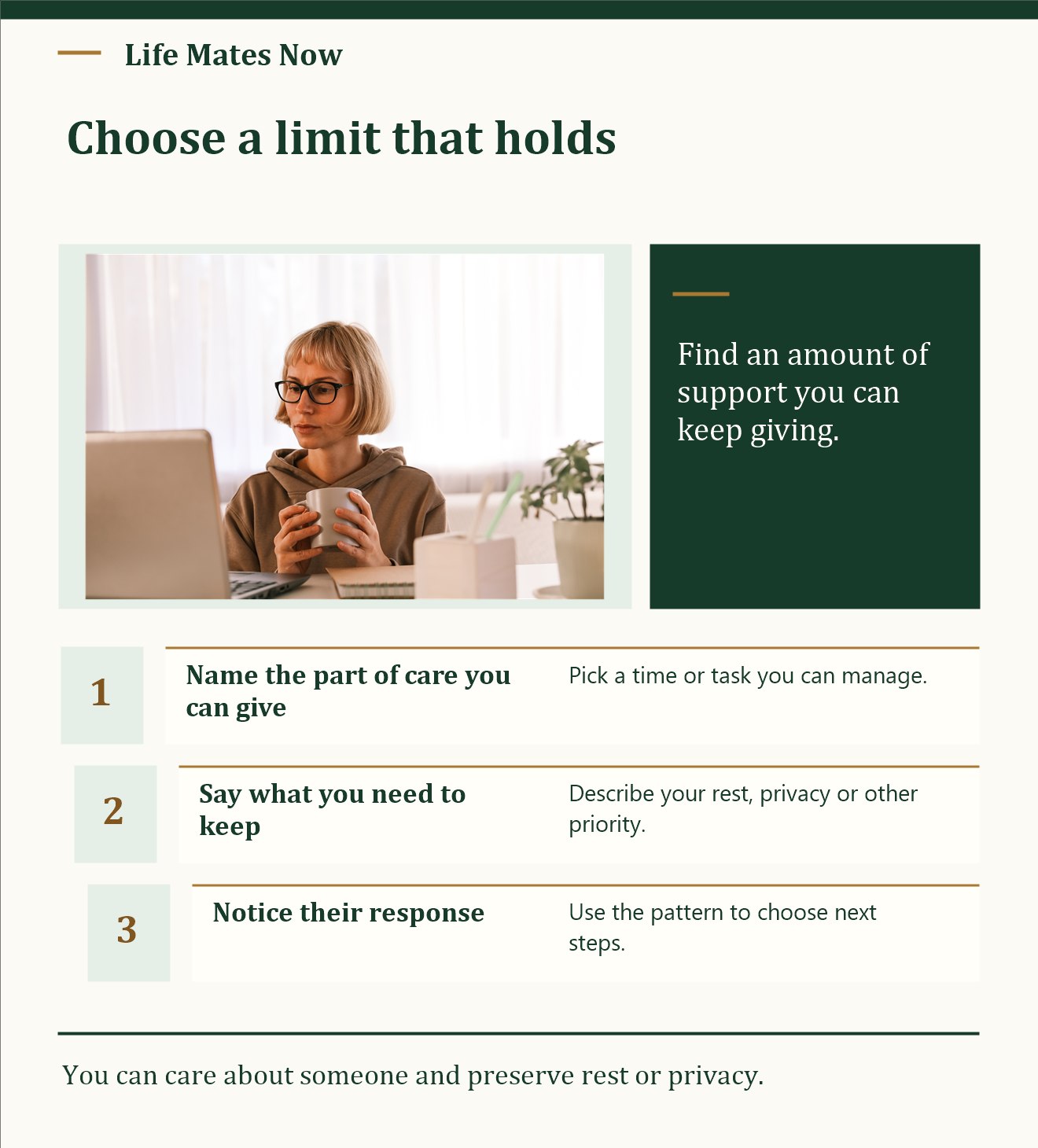
Choose a limit that holds
Find an amount of support you can keep giving.
- Name the part of care you can give Pick a time or task you can manage.
- Say what you need to keep Describe your rest, privacy or other priority.
- Notice their response Use the pattern to choose next steps.
You can care about someone and preserve rest or privacy.