

If your marriage feels strained, a list of warning signs can help you notice a concern, but it cannot decide what your relationship means or what you should do. Look at what is happening, how often it happens and whether you can raise it without fear.
The next step depends on the situation. Ordinary differences may call for a practical conversation. Repeated hurtful behaviour needs accountability. Threats, coercion or abuse call for attention to safety and individual support.

Look for patterns and their effect on daily life
Consider recurring criticism, promises that are repeatedly broken, avoidance of important decisions or an unequal load that stays unchanged after you discuss it. Describe examples rather than assigning a label to your partner.
Ask: “What happened? How did it affect me? What did each of us do afterward?” One difficult week during illness or an exceptional workload is different from a continuing pattern, though you can seek support for either.
Do not confuse differences with automatic failure
Wanting time alone, enjoying different hobbies or having less interest in sex does not by itself mean a marriage is failing. People’s needs, energy, health and circumstances vary. Privacy is also different from dishonesty about a shared responsibility.
The useful question is whether you can discuss the difference respectfully and make choices that work for both people. No one owes sex, passwords or constant availability as proof of commitment.
Notice how disagreements are handled
Disagreement can be uncomfortable without becoming threatening. Pay attention to insults, humiliation, intimidation or using a private disclosure against someone. Also notice whether either person can pause a conversation and return to it without punishment.
If it feels safe to do so, agree on a time to revisit one issue and a way to stop when the discussion becomes unproductive. A pause should help the conversation resume, rather than becoming a repeated way to avoid every concern.
Name one need and a specific change
Choose a concrete example and request. “I’m exhausted from handling every appointment. Could we divide them on Sunday?” is easier to respond to than a global accusation that nothing ever changes.
Listen to the answer, then consider whether the proposed action is realistic and shared. Set a time to review it. One person’s clearer wording cannot make the other person act, and the responsibility for hurtful behaviour remains with the person choosing it.
Keep children out of adult responsibilities
If you have children, avoid asking them to carry messages, choose a side or manage an adult’s distress. A child can be reassured that a disagreement is not their fault without being given intimate details.
Where it is safe and appropriate, showing a respectful repair after a disagreement can help. If there is intimidation or violence, focus on safety and specialist support rather than trying to stage a calm joint conversation.
Choose support that fits the situation
If both people can speak freely and want to explore change, a suitably qualified relationship therapist may help you discuss patterns and options. Ask about their approach, confidentiality, fees and how they assess safety. Counselling cannot guarantee repair or require you to remain married.
If you are afraid of your partner, controlled or abused, seek individual support from a domestic abuse service before arranging joint sessions. The US National Domestic Violence Hotline explains why couples therapy can be unsafe when abuse is present. Use a safer device if your activity may be monitored, and consider local emergency help if danger is immediate.
Review actions while keeping your choices open
Consider what changes over time: are responsibilities actually shared, limits respected and repeated harms acknowledged and stopped? An apology matters alongside what follows it. You do not have to wait for a relationship to reach a particular level of distress before asking for help.
You may choose to work on the marriage, take space or consider separation. Practical questions about housing, money, parenting and support can be discussed with an appropriate local adviser. You can take a manageable next step without promising yourself or anyone else a particular outcome.
Separate a household problem from the relationship conversation
If you keep falling out over the children’s morning routines, agree what needs doing and who can do it on each day. Make sure the children have clear information about pickup and school. Discuss the emotional fallout privately with your partner when it is safe.
If the same pattern continues, decide what type of help fits, such as practical household support or professional guidance. Fear, threats or monitoring call for attention to safety and individual support.
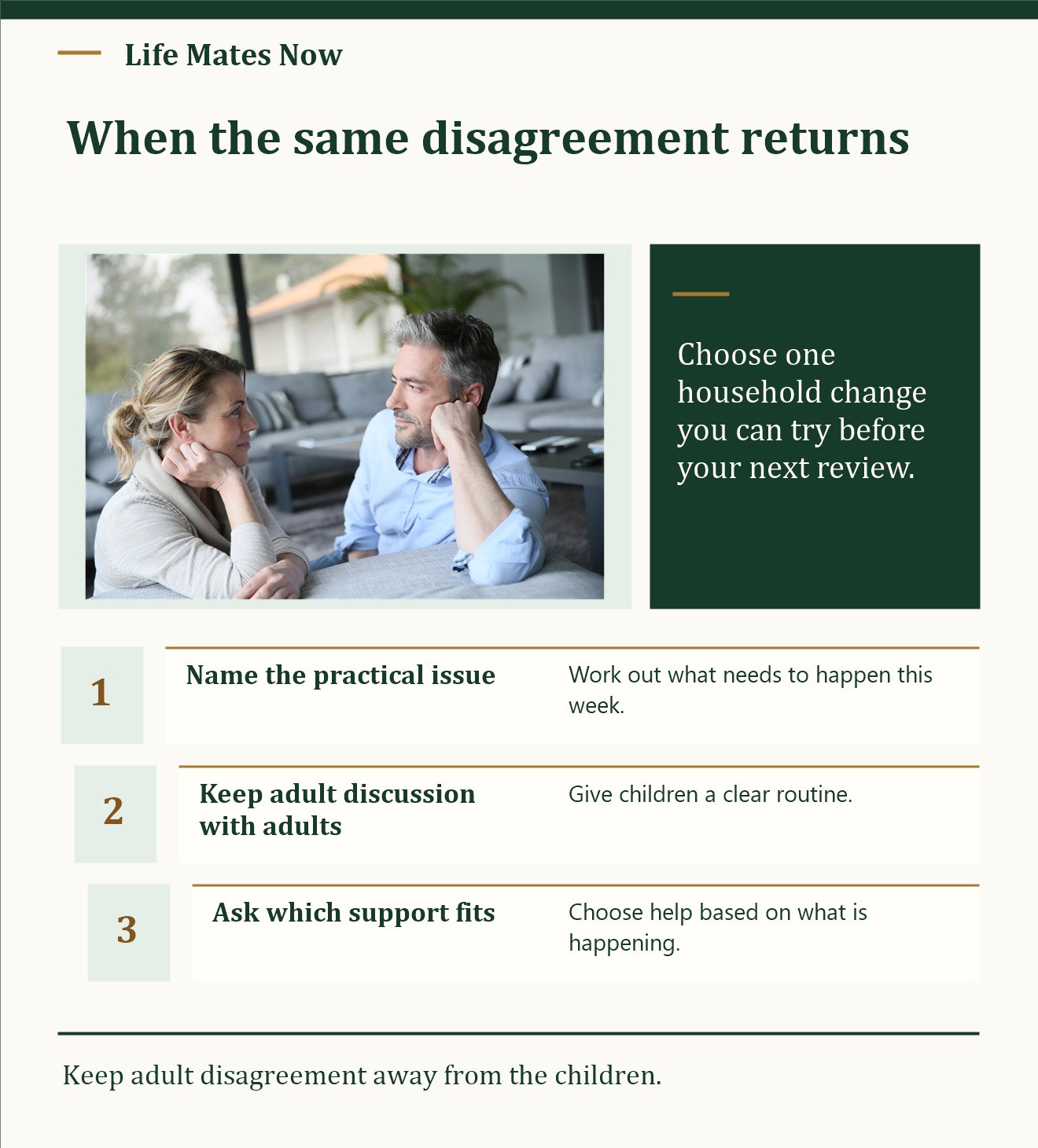
Read the infographic in text
When the same disagreement returns
Choose one household change you can try before your next review.
- Name the practical issue Work out what needs to happen this week.
- Keep adult discussion with adults Give children a clear routine.
- Ask which support fits Choose help based on what is happening.
Keep adult disagreement away from the children.