

Relationship expectations are easier to discuss when they describe everyday behaviour. You may want honest answers, time together or a fair share of household work. The useful next step is to explain what that means in your lives and hear what the other person can offer.
These eleven topics can help start that conversation. Respect and freedom from pressure matter throughout, while the details of contact, affection and shared plans need agreement. A relationship does not entitle either person to sex, constant availability or control over the other’s choices.
In this article
Respect and workable communication
1. Respect for each person’s choices
You can disagree about a plan without insulting, intimidating or humiliating each other. Respect includes accepting a no and recognising that both people have interests and relationships beyond the partnership. A person does not need to win an argument to deserve considerate treatment.
2. Communication you can both use
People differ in how they process information and express feelings. Discuss a format that helps: a conversation, written notes or time to think before answering. You can request a pause and agree when to return. Expecting respectful effort is different from requiring perfect wording or immediate responses.

Honesty and trust with privacy
3. Honest information about shared agreements
Discuss matters that affect your choices, such as exclusivity, shared commitments or a change in plans. If you cannot keep an agreement, say so. Honesty does not require giving someone every detail of your past or abandoning confidences that belong to other people.
4. Trust that allows questions and privacy
Trust can develop over time; having a doubt does not automatically make a relationship unhealthy. Ask about the specific concern and notice whether explanations and actions fit. Constant monitoring or demanded passwords do not create trust. Both people can have privacy while discussing relevant concerns openly.
Fairness, support and time apart
5. A say in decisions that affect you
A higher income does not give someone greater authority over the relationship. Consider money, unpaid work, planning and care responsibilities when discussing fairness. An arrangement can change with circumstances, and either person should be able to question it without being punished.
6. Support with realistic limits
You can ask for comfort, listening or practical help. A partner may also need rest or support of their own. Explain what would help and ask what is possible. Keeping other trusted connections available means that neither person has to provide every kind of help alone.
7. Space that is practical for both people
Discuss time for friends, interests and rest, including who handles shared responsibilities while the other person is away. Different needs for contact may require negotiation. Time apart should not become a punishment or a requirement to provide continual updates about every movement.
Shared time and freely chosen intimacy
8. Time together that fits your circumstances
A date can be a quiet meal, a walk or a short conversation when a more elaborate outing is impractical. Ask what kind of shared time you both enjoy. Budget, accessibility, work and caring responsibilities affect plans; expensive outings or a weekly schedule are not universal requirements.
9. Sexual choices without entitlement
You can discuss desire, preferences and differences, but nobody owes sexual activity to maintain a relationship. Consent must be freely given and can change. RAINN’s guide to consent explains why agreement is needed for each activity, including in an established partnership. Respecting a no comes before trying to resolve a difference in desire.
Affection, understanding and review
10. Affection that is welcome
Ask how each person likes to give and receive affection. Touch, words, thoughtful actions and shared attention may matter differently to you. Kissing, cuddling or holding hands are options when wanted, not obligations or tests of whether someone loves you.
11. Willingness to understand and revisit an agreement
You will not always understand each other immediately. Curiosity can help: “What matters most to you about this?” Then describe a specific next step and a time to check whether it is working. Understanding a need does not always mean being able to meet it.
Start with one topic rather than presenting all eleven as a performance review. Notice how you both respond to questions, limits and practical changes. If important needs remain incompatible, you can consider your choices without deciding that either person must be persuaded into a different relationship.
If discussion leads to threats, control or fear, seek confidential support instead of relying on better communication alone. You do not need to complete this checklist or reach a final decision before asking for help.
Read the infographic in text
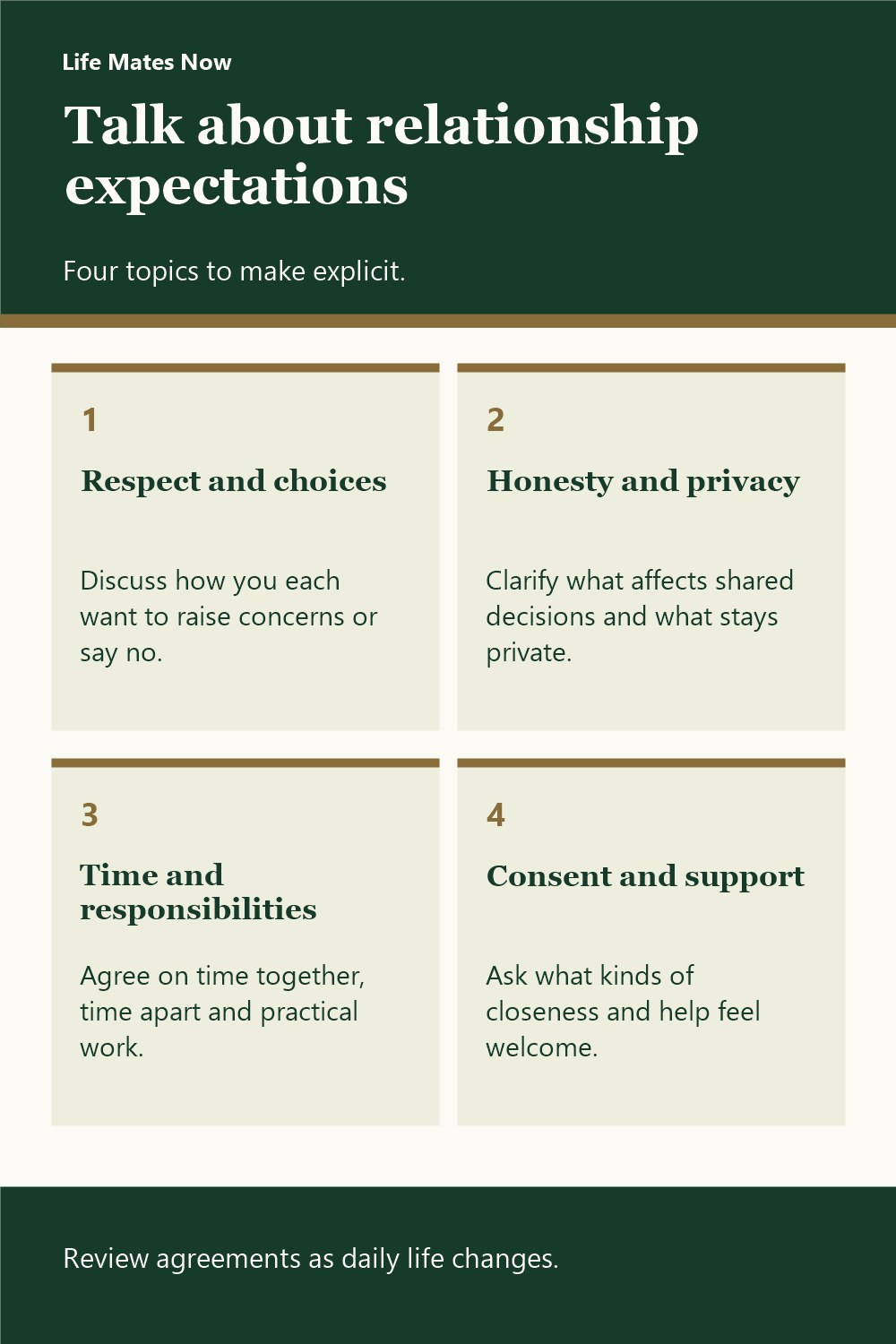
Talk about relationship expectations Four topics to make explicit.
- Respect and choices Discuss how you each want to raise concerns or say no.
- Honesty and privacy Clarify what affects shared decisions and what stays private.
- Time and responsibilities Agree on time together, time apart and practical work.
- Consent and support Ask what kinds of closeness and help feel welcome.
Review agreements as daily life changes.