

If you thought of someone as your soul mate, a breakup may unsettle both your everyday life and the meaning you gave the connection. You may still value a spiritual interpretation while feeling hurt, relieved, confused or uncertain about what comes next.
The eight experiences below are possibilities, not stages you must pass through or predictions about your future. Take what helps you reflect, and leave room for your own circumstances and choices.

1. You may feel more than one thing at once
Sadness can sit alongside relief. You might miss the connection and still know you do not want the relationship to continue. Mixed feelings do not prove that the bond was false or that ending it was a mistake.
Try naming what you feel without deciding what it means for the whole future. You can choose a boundary today while acknowledging that part of you still cares.
2. The loss may include routines and an imagined future
You may notice an empty part of the day, a changed home or plans you no longer expect to share. Missing those things does not mean that a part of your identity has literally gone missing.
Ask which need is most immediate. You might need company, rest, practical advice or a different evening routine. One useful action can address that need without answering every question about the relationship.
3. Your ideas about love may need room to change
You might question whether there is one soul mate, several meaningful connections or another way to understand what happened. There is no requirement to settle that belief now.
A connection can have mattered without being your only chance of being loved. Equally, no one can promise a future partner or a reunion in another life. Notice what your beliefs help you value rather than using them to predict another person’s choices.
4. You may want quiet, company or both
Some time alone can be welcome. You may also want someone nearby without explaining the whole story. Consider what feels restorative and whether you are able to meet everyday needs.
You can say, “I don’t want to talk about the breakup tonight, but I’d like some company.” If isolation or distress is becoming hard to manage, reach out for support rather than treating withdrawal as a stage you must endure alone.
5. Contact may need a new shape
There is no rule that soul mates must become friends or disappear from each other’s lives entirely. Your choices may depend on shared responsibilities, safety, feelings and whether both people respect the arrangement.
You might take a break from personal messages, limit contact to practical matters or decide not to continue contact. Friendship is an option only if both people want it; it is not a way to keep pursuing someone who has ended the relationship.
6. Memories may return unexpectedly
A song, place or date can bring someone to mind. You do not need to read that moment as a message that they are returning or evidence that you have failed to recover.
Notice what the memory brings up, then choose what would help now. That might be writing something privately, speaking with a trusted person or returning to the task in front of you. Remembering does not require you to reopen contact.
7. Your priorities may become clearer
You may reconsider what you want around affection, time, commitment or everyday responsibility. You can name something you would choose differently without claiming that the breakup had to happen for your growth.
Keep the reflection specific: “I want plans we both follow through on” or “I need to be able to say no.” You do not owe gratitude for mistreatment or have to forgive on someone else’s timetable.
8. You can decide whether and when to date again
You might welcome a new connection later, prefer time on your own or remain unsure. None of those choices has to prove your loyalty to the previous relationship or your willingness to move on.
If you do date, meet the new person as an individual rather than asking them to recreate a past bond. For now, a useful next step might simply be a clear boundary, a manageable plan or support from someone you trust.
Give the future you imagined a place in the grieving process
If you had pictured travelling together and the relationship ends, you may miss both the person and the trips you expected to share. Write one line about each kind of loss. Then choose something you’d still want in your future, even if it takes a different shape.
You can hold on to the spiritual meaning the relationship had for you. Keep decisions about contact and future plans tied to what you want and what is available now.
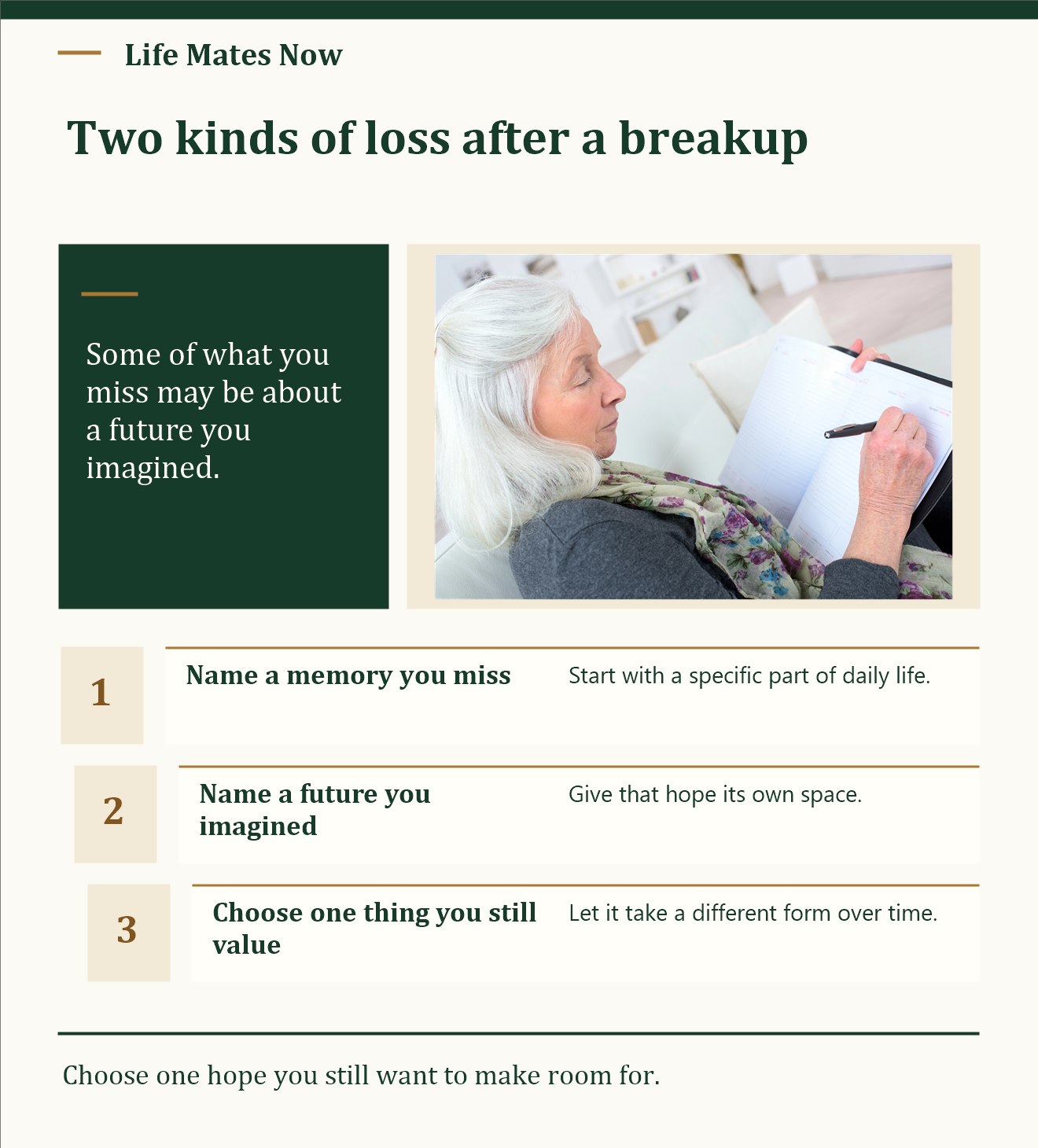
Read the infographic in text
Two kinds of loss after a breakup
Some of what you miss may be about a future you imagined.
- Name a memory you miss Start with a specific part of daily life.
- Name a future you imagined Give that hope its own space.
- Choose one thing you still value Let it take a different form over time.
Choose one hope you still want to make room for.