

You can care about someone and still decide that you do not want to continue a relationship. You may feel sad, relieved, guilty or unsure how to begin the conversation. Caring does not mean you can make the ending painless.
Focus on a clear decision, a suitable way to communicate it and the practical arrangements that follow. You can be considerate without making your former partner’s agreement a condition of leaving.
Clarify your decision and the immediate practical needs
Ask yourself whether you are deciding to end the relationship or asking for a change within it. Those are different conversations. If you have decided to leave, write a sentence that states that decision plainly.
Consider what needs preparation: somewhere to stay, transport, access to belongings or support with shared responsibilities. Taking time to make a safer practical plan is different from promising a future you no longer want. You do not need to make a major decision on a particular timetable to prove that you are honest.
Choose a way to communicate that feels safer
If the relationship has been respectful and meeting feels safe, choose a setting with privacy, enough time and a straightforward way to leave. You can let them know that you want to discuss the relationship without arranging a romantic occasion.
If you fear intimidation, pressure or violence, a private meeting or an in-person breakup is not an obligation. A call, message or support from another person may be more appropriate. The US resource love is respect discusses planning a safer breakup. Consider specialist support for your circumstances, especially if your activity may be monitored.
Say that the relationship is ending
Use direct words rather than suggesting a temporary break if you mean an ending. For example: “I care about you, but I don’t want to continue our relationship. I’m ending it.” You can add a brief, honest explanation without listing every fault or offering reasons you do not believe.
Avoid promises of friendship, reconciliation or a future date simply to soften the moment. You can acknowledge what has mattered to you while remaining clear about the decision you are making now.
Allow feelings without turning the decision into a debate
The other person may be upset, surprised or disappointed. You can listen for a while if you want to and it feels safe. You do not have to argue until they agree, accept insults or keep repeating an explanation.
Try, “I understand this hurts. My decision is still to end the relationship.” If the conversation becomes threatening or you cannot leave freely, prioritise getting support. A respectful ending does not require you to stay through an unsafe exchange.
Make shared arrangements specific
List the practical matters that need a plan, such as returning belongings, paying an agreed bill or communicating about a child or pet. Decide which items can be handled later rather than settling everything during an emotional conversation.
Use a suitable channel and a clear topic: “Please email about collecting your things.” A trusted third person or another agreed method may help with an exchange. If housing, money or parenting arrangements are complicated, seek appropriate local advice rather than relying on an informal promise you do not understand.
Set contact and social-media boundaries
You might want no personal contact for a while, limited practical messages or a different arrangement. Say what you intend to do and follow through where possible. An ending does not create an obligation to provide unlimited conversations about closure.
Consider muting or changing social-media connections if updates make it harder to keep your boundary. You do not have to give up ordinary public places indefinitely, but a temporary change of routine may be useful or safer in your situation. Avoid sharing private breakup details publicly or using posts to provoke a response.

Find support that does not depend on your ex
Plan for the hours after the conversation. You might arrange company, a meal, a walk or a quieter evening. A trusted person can help you hold a decision while allowing room for grief and mixed feelings.
Your former partner may need support too, but you do not have to remain their main source of comfort. Neither person has to start a new relationship or become friends by a deadline. You can care about what happened and still keep the boundary that the relationship has ended.
Say the decision once and give practical arrangements their own space
If you’re ending a relationship you value, you can say, “I care about what we’ve shared, and I’ve decided to end our relationship.” If there are belongings to return, propose a separate time or an agreed intermediary where appropriate.
Choose the safest method of communicating for your circumstances. If you’re worried about threats or pressure, talk privately with someone who can help you think through a safer plan.
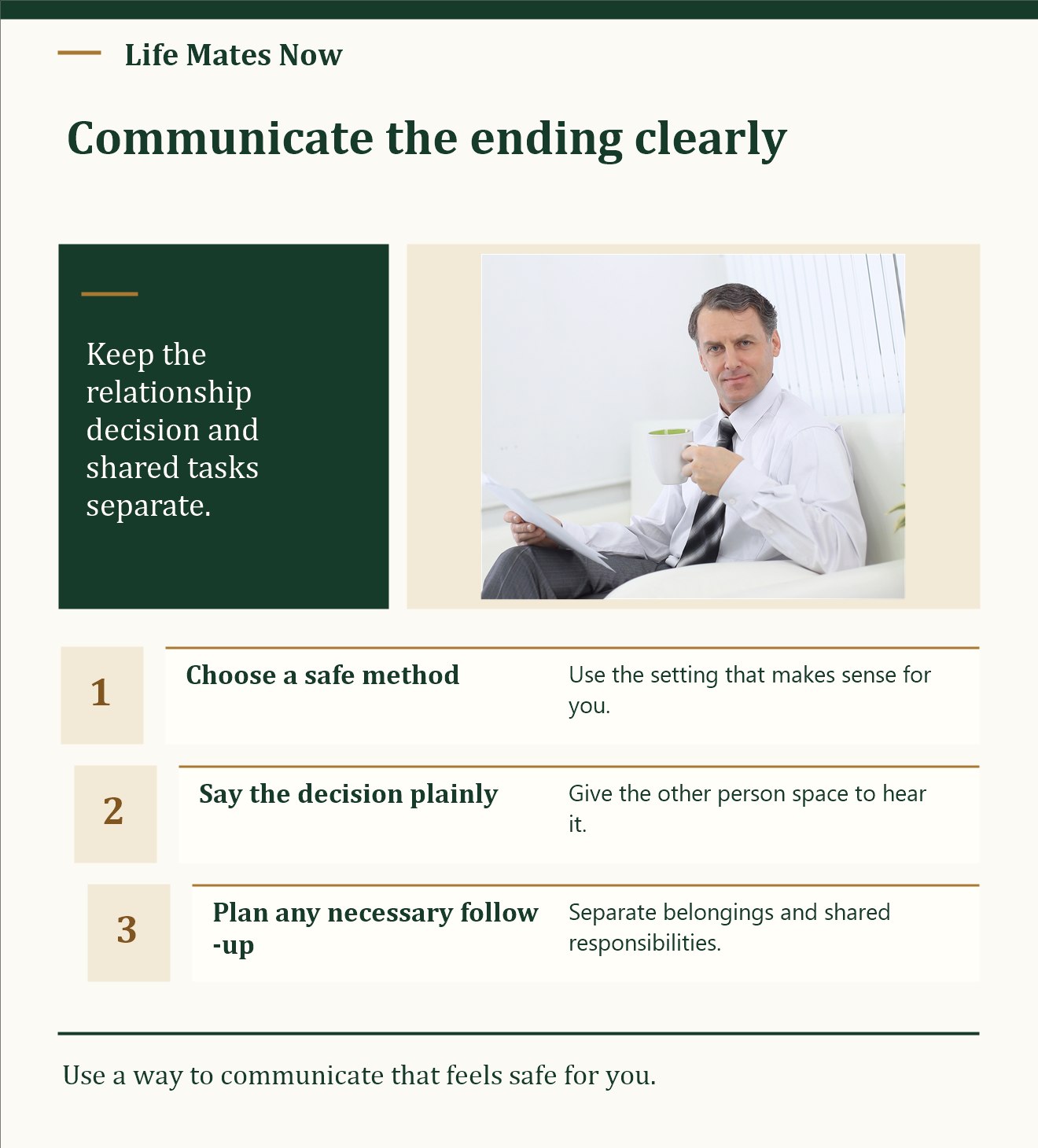
Read the infographic in text
Communicate the ending clearly
Keep the relationship decision and shared tasks separate.
- Choose a safe method Use the setting that makes sense for you.
- Say the decision plainly Give the other person space to hear it.
- Plan any necessary follow-up Separate belongings and shared responsibilities.
Use a way to communicate that feels safe for you.