

You can care about someone while recognising that the connection available now does not meet your needs. Perhaps their replies have become less frequent, plans rarely happen or they have said that they do not want a relationship. The disappointment can matter even if you only dated briefly.
You cannot make feelings disappear on command. You can decide how much contact to have, what you want to ask and where to put your time while those feelings change at their own pace.
On this page
1. Separate what happened from what you suspect
Start with the information you have. “They cancelled two plans and have not suggested another” describes events. “I frightened them by caring too much” is an explanation you cannot establish from those events alone.
Slower replies can have different causes. You do not need to diagnose someone as avoidant, decide they are secretly in love or blame your own enthusiasm. Notice the pattern and how it affects you.
If they have clearly declined a relationship, take that answer seriously. Looking for clues in old messages, social posts or spiritual predictions does not create a new agreement. You can respect your beliefs without using them to override another person’s stated choice.
2. Ask for the clarity you need
Where there has been no clear conversation and contact is welcome, make a direct, manageable request. You might say, “I have enjoyed getting to know you. Are you interested in continuing to date?” or “I would like regular plans. Is that something you want?”
The aim is to understand what is available, rather than persuade them to feel differently. Ask only what is relevant to your decision. You do not need an account of every private reason behind their answer.
If someone repeatedly avoids answering, you can make a decision based on that uncertainty. You are not required to keep waiting until you know exactly why they are unavailable. Avoid repeated requests after a clear no or a request for no contact.

3. Choose contact that fits the situation
Consider whether messages, one-to-one meetings or checking their profile are keeping you involved in an arrangement you no longer want. You might mute updates, stop initiating dates or explain that you need some space.
A possible message is, “I want more than friendship at the moment, so I am going to step back from our private chats.” Make the limit about what you will do. It is not a tactic to make them miss you or a test of whether they will chase you.
If you share work, classes or parenting responsibilities, necessary contact may continue. Keep that communication focused on its practical purpose. You do not have to turn each exchange into a conversation about your feelings.
4. Keep ordinary care and connection available
Choose one or two things that make the next day more workable: a meal you can manage, a familiar walk, time with a friend or finishing a small task. You do not need a major reinvention or a perfectly busy social life.
Tell a trusted person what kind of support would help. You may want company without discussion, space to talk or help resisting the urge to seek more updates. Friends do not need to report on the other person or compare who seems happier.
If distress is interfering with sleep, work or ordinary activities, consider speaking with a qualified health professional. Seeking support does not require proving that the relationship was long enough to count.
5. Decide what you want to do next
You can choose not to date for a while, meet someone new when you want to or review whether friendship is workable later. None of these choices proves how much you cared. There is no deadline for feeling differently.
If you do date, respect any existing exclusivity agreements and be honest about what you are available for. A new person does not need to become a way of provoking jealousy or demonstrating that you have moved on.
Look for a next step that supports your needs now. For broader ideas about keeping your own life and support available, the NHS offers guidance on relationships and wellbeing. Your feelings may take time; your choices can still reflect the information you have today.
Decide how to handle a recurring place where you see them
If you both go to the same book group, you might want to keep attending while pausing personal messages. Decide how you want to greet them and plan what you’ll do on the way home if the evening brings up difficult feelings.
Give yourself time before changing the arrangement. You can still value a book group or friendship while letting the other person’s answer have its place.
Read the infographic in text
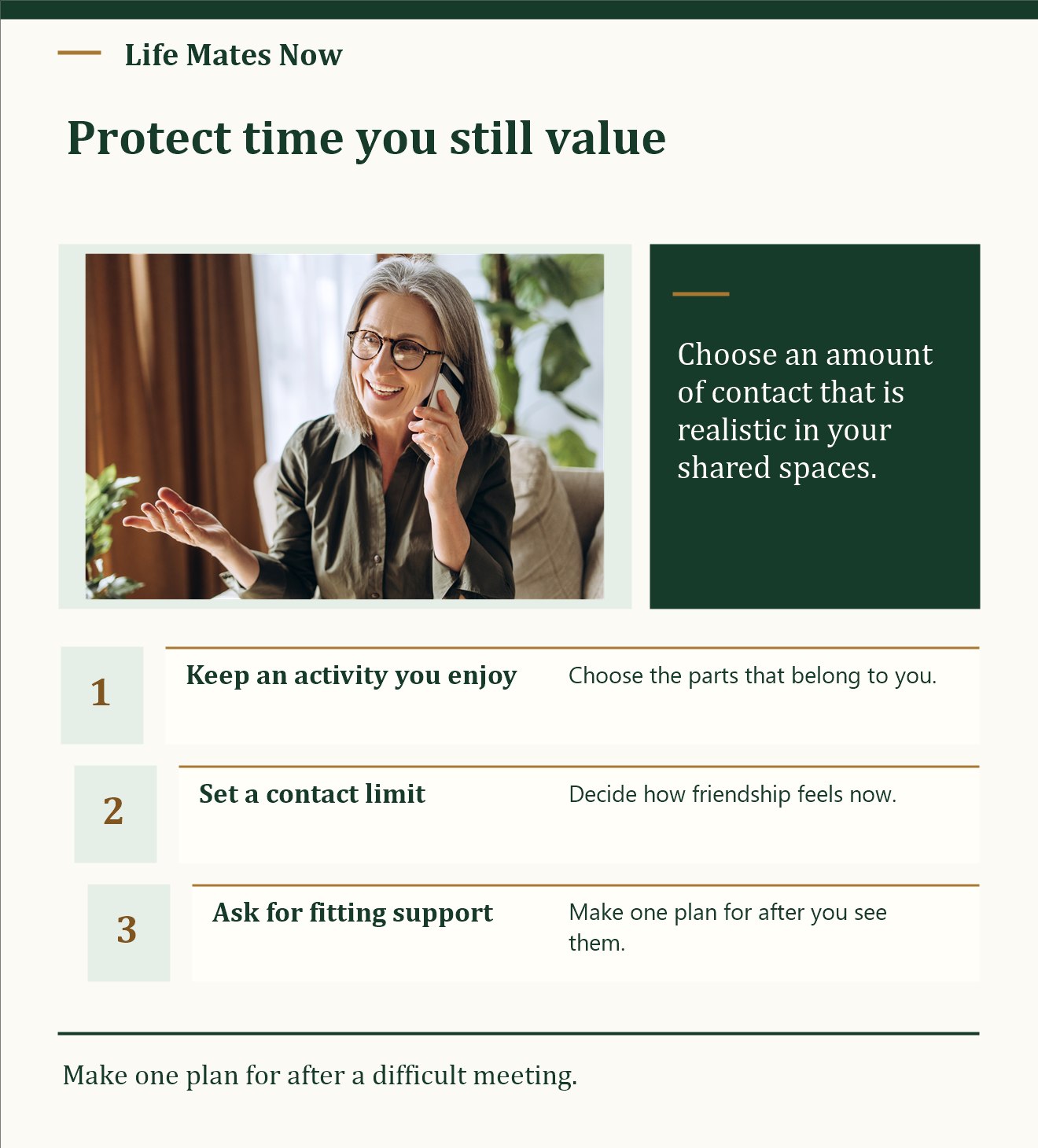
Protect time you still value
Choose an amount of contact that is realistic in your shared spaces.
- Keep an activity you enjoy Choose the parts that belong to you.
- Set a contact limit Decide how friendship feels now.
- Ask for fitting support Make one plan for after you see them.
Make one plan for after a difficult meeting.