

Having romantic feelings for a friend can bring warmth, hope and uncertainty at the same time. You may enjoy the closeness you already share and wonder whether dating would feel right. You do not need to turn every conversation or gesture into a test.
Start with your own wishes, then leave room for theirs. Attraction does not create an obligation, and needing time or distance does not erase the friendship you have had.

Friendship and romance can overlap
Friendship and romance can both include affection, trust, commitment and emotional closeness. Neither has a single required shape. Friends may be deeply important to each other while living separate lives, and partners may build connection in different ways.
No one has to be constantly available to prove they care. Work, health, family responsibilities and a need for solitude can affect how much time someone has, even in a close relationship.
Attraction does not settle compatibility
Wanting to kiss or date a friend tells you something about your feelings. It does not tell you whether they feel the same, want the same relationship or share your expectations about exclusivity, children or everyday life.
Consider what you know and what remains a question. A strong friendship can offer a foundation for dating, but it cannot guarantee that a romantic relationship will suit both people.
Notice what you want without testing them
Ask yourself what you are hoping for: a date, sexual intimacy, a committed partnership or more time together. You might want several things or still be unsure. Writing down your wishes can help you separate them from guesses about your friend.
Avoid creating jealousy, withdrawing affection as a test or asking others to investigate. Those tactics can put pressure on a friendship without giving you a clear, freely offered answer.
Jealousy is a feeling, not proof of love
You might feel jealous when a friend dates someone else. That feeling can point to attraction, fear of losing time together or something you want in your own life. It does not prove romantic love or reveal your friend’s feelings.
Let the feeling inform reflection rather than control their choices. You can reduce exposure to dating updates or request some space without criticising their partner or waiting for an opportunity to disrupt the relationship.
Frequent thoughts do not reveal their answer
Thinking about someone often can feel significant. Notice whether you enjoy your actual time together or spend much of it imagining a future they have not agreed to.
If checking messages or replaying encounters is taking over your day, give yourself a practical break: mute updates for a while, return to another activity or talk with someone outside the friendship. Constant analysis is not a requirement for caring.
Respect different sexual and romantic choices
Sexual attraction, romantic attraction and emotional closeness can overlap without being identical. Some romantic relationships are nonsexual; some people are asexual. A consensual sexual friendship also needs honest expectations rather than assumptions about what sex will lead to.
Discuss what each person actually wants. Friendship, flirting, previous intimacy and a yes on another occasion do not establish consent now.
Enjoy talking without counting signs
It is natural to mention someone you enjoy. Frequent conversations, remembered details or a long hug can mean different things to different people. You do not need a checklist that converts kindness into romantic interest.
Look for mutual effort, but keep its meaning open. Only your friend can tell you whether they want to explore dating.
Butterflies are not an answer
Excitement, nerves and physical attraction can accompany a crush. They do not establish compatibility or mean that you must act immediately. Notice whether you also feel able to speak honestly, disagree and keep your boundaries.
You can enjoy a feeling without deciding what it will become. Give yourself time if you need it.
Choose whether to ask directly
If your friend is available and you want to ask, choose a private moment with an easy way to end the conversation. A small invitation is often clearer than a long declaration that asks them to manage all your feelings.
For example: “I’ve realised I’m interested in going on a date with you. Would you like that? It’s okay if you don’t.” Ask once, allow an honest answer and avoid involving mutual friends to persuade them.
If they want friendship
Accept the answer without debating whether they have understood their own feelings. Disappointment is valid, but your friend does not owe you a trial date, physical affection or an explanation that satisfies you.
You may continue the friendship, change how often you meet or take a break. You can say, “I respect that. I need a little time before we spend time together as usual.” Do not promise friendship only as a way to keep pursuing them. Dating someone else is optional, not a recovery deadline.
If you both want a date
Agree on one manageable next step rather than assuming an established friendship settles every dating question. Clarify whether this is a date, what pace feels comfortable and what you want to keep private.
Check in after spending time together. Either person can decide the romantic connection does not fit. Talk about what contact might feel workable instead of promising that nothing will change.
If you are not ready to speak
You can keep feelings private while deciding what to do. Be honest with yourself about whether the current friendship feels sustainable. You may need fewer intimate conversations, less one-to-one time or a break from hearing about their dates.
Set limits around your own participation rather than controlling theirs. You do not have to become their main source of support while silently hoping that help will earn a relationship.
Choose a pace that leaves room for both people
A friendship can remain valuable even when feelings change or contact becomes different. Neither a lifelong friendship nor a romantic outcome can be promised. What you can choose is a clear request, respect for the answer and care for your own limits.
If the uncertainty feels hard to manage, a trusted person or counsellor can help you think through your choices without speaking for your friend. You can take one next step without knowing the whole future.
Think about the friendship you want after the conversation
If you see a friend every weekend and want to ask them on a date, decide whether you can accept either answer. Ask privately and choose a question they can respond to freely. You can say you would like a little time to adjust if they want to stay friends.
Think ahead about one recurring plan. You can still take part if that feels comfortable or ask for a break without asking mutual friends to take sides.
Read the infographic in text
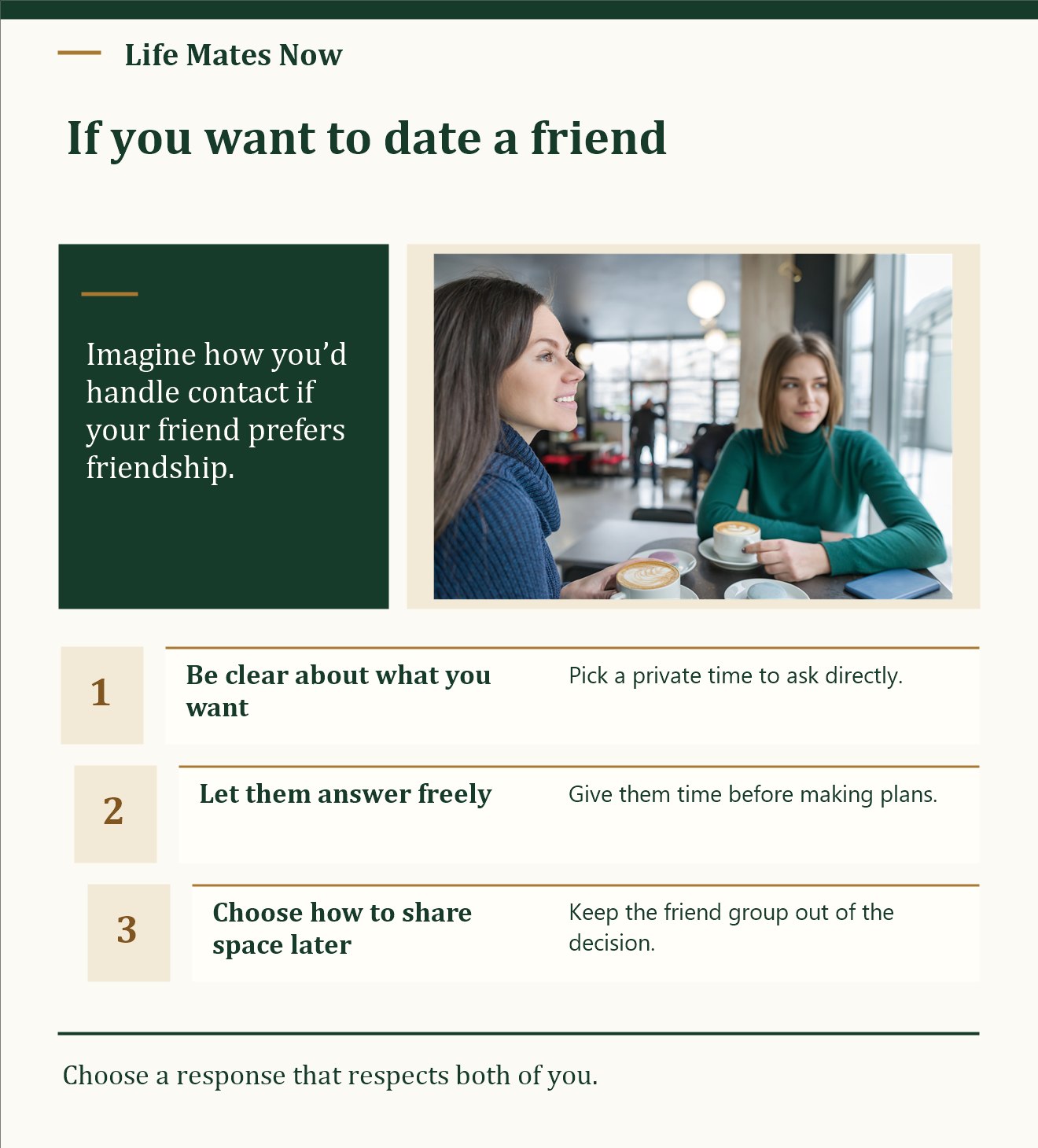
If you want to date a friend
Imagine how you’d handle contact if your friend prefers friendship.
- Be clear about what you want Pick a private time to ask directly.
- Let them answer freely Give them time before making plans.
- Choose how to share space later Keep the friend group out of the decision.
Choose a response that respects both of you.