

Dating advice often promises a list of things that all men secretly dislike or all women should change. People have individual preferences, and those preferences do not determine another person’s worth. You do not need to change your voice, body or personality to fit a supposed universal rule.
A more useful question is whether you and a particular person enjoy each other, communicate honestly and treat each other with respect. You can be curious about attraction without turning dating into a performance.

1. Ask about the person, rather than the gender
One date may enjoy frequent messages; another may prefer arranging a time to meet. One may like a quiet evening, while another wants a busy social plan. You learn more by asking than by assuming their gender gives you the answer.
Offer a real choice: “Would you enjoy a walk or somewhere to sit and talk?” Listen to the answer and share what you would enjoy. A preference can be different from yours without being a criticism of either person.
2. Keep appearance and self-worth separate
Attraction varies. Someone may or may not be drawn to a particular look, but your body, clothing, voice or cosmetic choices do not establish your honesty, intelligence or suitability for commitment.
Choose how you present yourself with your own comfort and circumstances in mind. A considerate date can express a preference without mocking you or demanding a change. You can decline advice about your appearance and notice whether that limit is respected.
3. Let conversation show your actual interests
You do not need to pretend to know less, agree with everything or manufacture an unusual personality to hold someone’s attention. Talk about something you care about, ask questions and leave room for the other person to speak.
It is also fine to say, “I do not know much about that; what interests you about it?” A conversation is not an intelligence test. Notice whether curiosity flows both ways and whether you feel able to express a different view without being belittled.
4. Express needs without creating a test
If you want reassurance, help or more time together, try naming the request. Pretending to be in difficulty or expecting someone to prove affection by guessing can make the actual need harder to understand.
“I felt disappointed when our plan changed. Could we arrange another time?” is a specific conversation. Having feelings or needing support does not make you childish. You can express disappointment while respecting the other person’s freedom to answer.
5. Keep generosity and boundaries voluntary
Cooking, giving a present or helping with a task can be welcome when freely offered. Consider whether the time, cost and effort are comfortable for you. Giving more than you want in the hope of securing commitment can leave an expectation that has never been discussed.
You can be kind and still say, “I cannot do that this week.” Our guide to personal boundaries offers ways to name a limit without turning it into a demand that another person feel a certain way.
6. Treat intimacy as a shared choice
Being interested in sex, preferring to wait or not wanting sexual contact does not make someone less worthy of respect. Discuss what you each want without using shaming labels or guessing what a person’s appearance says about their wishes.
Consent needs to be freely given and can be withdrawn. Affection, a date or a gift does not create an obligation. You can keep private details private, ask what contact is welcome and stop when someone declines or seems unsure.
7. Notice the response and choose your next step
Pay attention to whether a date listens, respects your no, follows through on plans and makes room for your own interests. You also have a part in offering those same courtesies. An appealing image or a strong initial attraction cannot answer those questions on its own.
If you want different kinds of contact or commitment, talk about the difference directly. You do not have to become less expressive, more dependent or endlessly agreeable to make the arrangement fit.
The guides to clearer communication and love and independence offer practical starting points. A worthwhile next step may be another conversation, another date or choosing to move on. You can make that decision without treating a mismatch as proof that something is wrong with you.
Turn a dating assumption into a question for the person
If you’ve heard that one gender always wants the other person to make the first move, ask the person you’re meeting what they like. You might say, “Would you rather pick the next outing, or shall I choose something?”
Keep your own preferences in the conversation. Asking and answering clearly can give you more information about how you get along than relying on a broad description of anyone’s gender.
Read the infographic in text
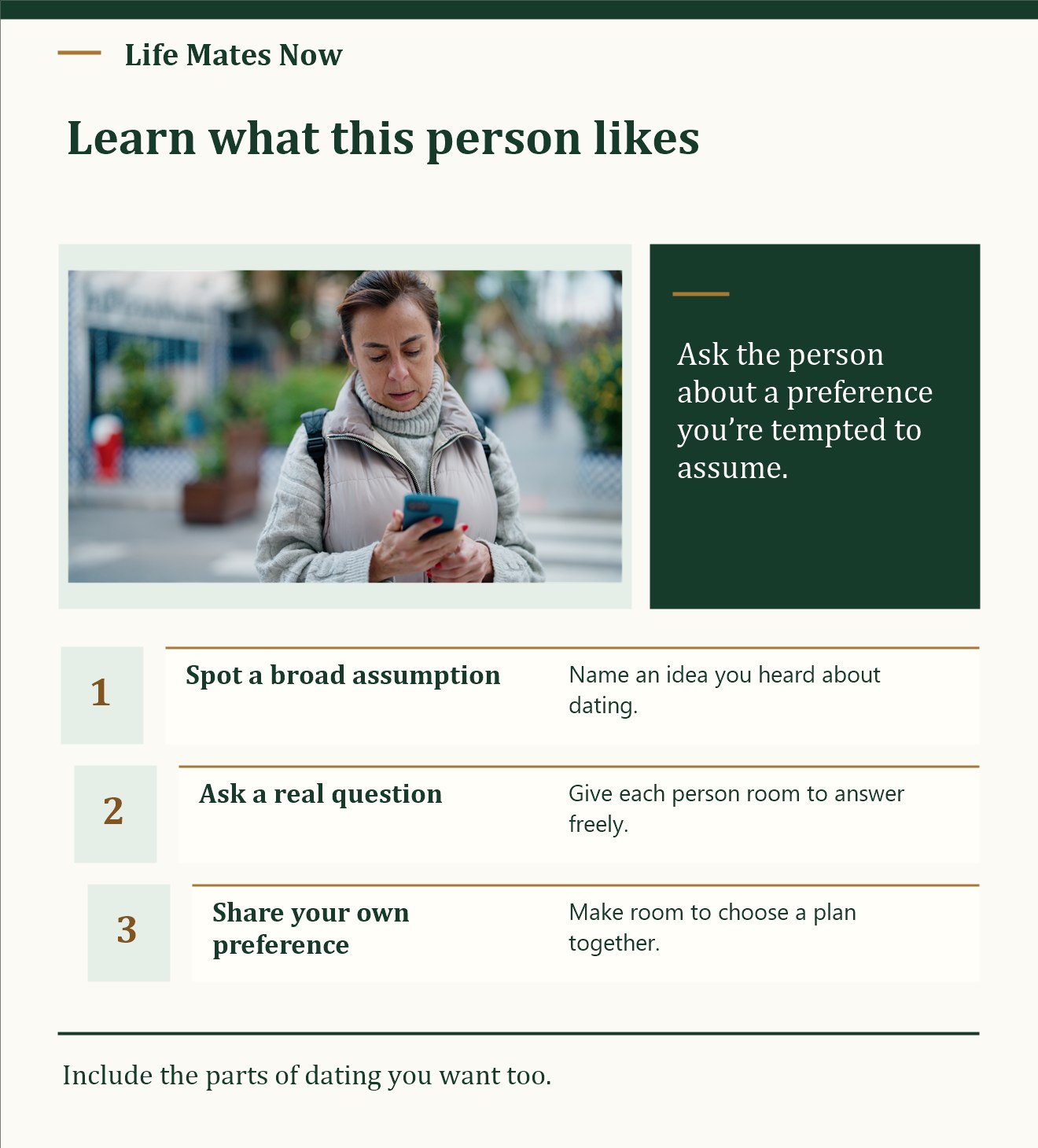
Learn what this person likes
Ask the person about a preference you’re tempted to assume.
- Spot a broad assumption Name an idea you heard about dating.
- Ask a real question Give each person room to answer freely.
- Share your own preference Make room to choose a plan together.
Include the parts of dating you want too.