

Advice to “meet more people” can overlook what makes dating difficult: time, money, access, caring responsibilities, an unwelcome experience or simply not enjoying the available options. A person can want connection and still be unsure how much effort they want to devote to dating.
There is no requirement to find a soul mate or marry in order to have a worthwhile life. If you want to date, or support someone who does, focus on the person’s actual wishes and practical circumstances.
Ask what kind of connection is wanted
Start with the present wish rather than an assumed destination. Someone may want companionship, a committed relationship, occasional dates or no dating at all. They may also be undecided. Being single does not reveal which answer is true.
If you are talking with a friend, ask whether they want listening, suggestions or practical help. An answer you did not expect does not make their interest in connection fake. Leave room for them to keep some parts of their life private.
Separate a past experience from a prediction
A disappointing or harmful experience can matter without forecasting every future meeting. Consider what you learned about a particular situation, and which boundaries or sources of support you want now.
You do not have to minimise harm, date before you are ready or treat discomfort as something to overcome through repeated exposure. You can try a different approach, take a break or choose not to date. None of those decisions needs to prove that you are fearless.

Identify the obstacle you can actually work with
“Dating is hard” may contain several different problems. Is the difficulty finding suitable opportunities, arranging childcare, managing travel, paying for an activity or finding enough private time for a conversation?
Choose one concrete obstacle before proposing a solution. A short nearby meeting may address travel or time; it will not resolve incompatible relationship goals. Practical planning is more useful when it responds to the actual concern rather than a general demand to try harder.
Choose an approach that fits your resources
You might prefer an introduction, an interest group, an accessible online community or a dating app. Consider the time, cost and privacy involved. A paid service does not establish that its users are more serious, safe or compatible than people using a free option.
You can test an approach on a small scale and decide whether it suits you. You do not need to keep buying memberships or accepting invitations because someone else believes that persistence must eventually produce a partner.
Get to know someone without ignoring your limits
A profile or public information can be incomplete, and an enjoyable meeting still leaves much to learn. Ask relevant questions, share details gradually and notice whether the person respects a boundary. You can decline a meeting without first collecting proof that the person is unsuitable.
Be cautious about urgent money requests from an online romantic interest. The Federal Trade Commission explains how romance scams can use false profiles and personal stories. An affectionate exchange or promised visit is not a reason to send money.
Offer practical help without taking control
If a friend wants help, offer something specific that you can realistically provide: company at an event, an introduction with permission, a lift or agreed help with childcare. Check what details they are comfortable having shared.
Avoid making support conditional on accepting a date, reporting every message or following your preferred plan. Your help should leave them with more room to choose. They can appreciate the offer and still decline it.
Review the approach without judging your worth
After a conversation or date, consider what felt comfortable, what you learned and whether you want more contact. A meeting need not lead to marriage or another date to offer useful information. You are not required to continue because you have already invested time.
You can change your plans, protect an existing routine or pause. Friends can keep inviting you into ordinary life without making romance the measure of your progress. Connection and support matter while the future remains open.
Name a dating obstacle you can actually change
If a friend says dating has become exhausting, ask whether the hard part is choosing where to meet, planning around work or handling the emotional uncertainty. They might want help with one practical detail or simply someone to listen.
If you’re the one dating, try changing a single thing for the next few weeks. You could choose plans closer to home or spend less time messaging before asking what someone wants. Make room to pause if you’re stretched.
Read the infographic in text
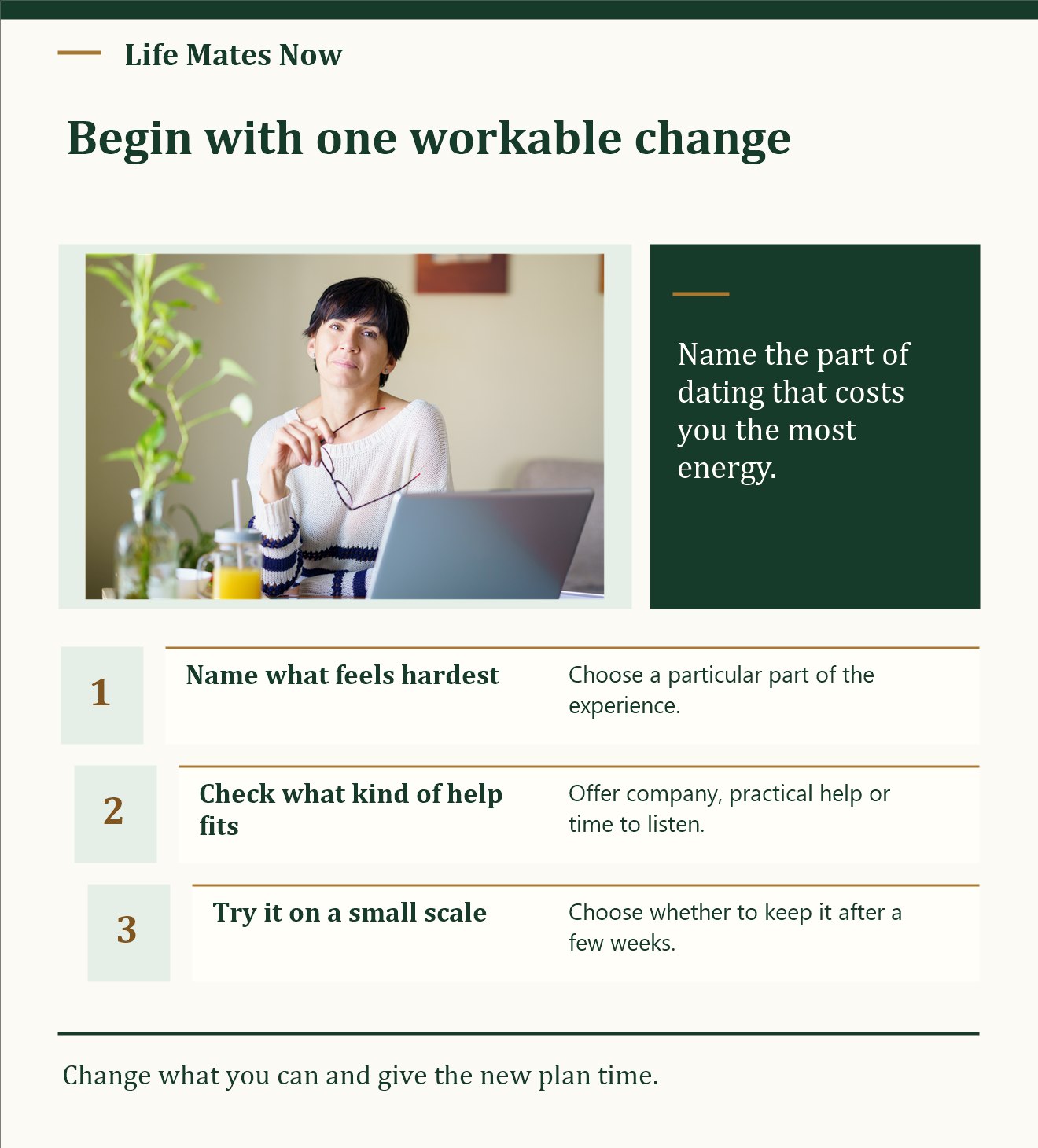
Begin with one workable change
Name the part of dating that costs you the most energy.
- Name what feels hardest Choose a particular part of the experience.
- Check what kind of help fits Offer company, practical help or time to listen.
- Try it on a small scale Choose whether to keep it after a few weeks.
Change what you can and give the new plan time.