

Happiness in a relationship can include affection, shared enjoyment and the ease of being yourself. It can also mean having room for different moods, needs and interests. You do not have to feel cheerful all the time for the relationship to matter, and one personality trait cannot tell you how a partnership will turn out.
A useful starting point is everyday behaviour. Can you ask for attention, say no, discuss a disappointment and make choices without being belittled? Consider what helps both people feel respected and which parts of your shared life need an adjustment.
On this page
Define what happiness means in your lives
Ask each other for an example of a recent moment of connection. Perhaps you enjoyed cooking together, felt understood during a difficult conversation or appreciated someone taking care of an agreed task. Specific moments give you more to work with than an instruction to “be happier”.
Your answers may differ. One person may want quiet companionship while the other hopes for more planned outings. Explore what each experience offers rather than deciding that one way of connecting is more loving. Compatibility includes whether there is room to discuss and accommodate important differences.
Stress or a mental health difficulty does not make someone incapable of a caring relationship. Notice how you treat each other and what support is available. Being agreeable at the expense of your own needs is not a requirement for closeness.
Offer attention you can sustain
Small invitations for attention may be easy to miss: a story about the day, a question or a request for company. If you have time, pause and respond with interest. You can ask, “Would you like me to listen, help think it through or just sit with you?”
If you are working, resting or caring for someone, say what you can offer. “I want to hear this. Can we talk after dinner?” is clearer than distracted agreement. Follow through on the time you suggest, or explain if plans need to change.
Attention does not require constant availability. Both people can keep friendships, hobbies and private time. An arrangement that depends on one person always being ready to respond may need to be reconsidered.
Listen for the specific need
Let your partner finish before preparing your response. Check your understanding: “It sounds as though you felt left out when I made the plan without asking. Have I understood?” You can acknowledge the effect of something while still having a different perspective on the event.
The NHS guidance on healthy relationships suggests listening actively and asking for clarification. Choose a time when you can give the conversation some attention, or try writing down a point you find difficult to explain aloud.
Make room for the underlying request. “You never help” might need a discussion about particular household tasks, but you do not have to guess. Ask what help is needed and say honestly what you can take on. Keep the discussion focused on behaviour rather than labels about either person’s character.
Agree on a small change
Choose one adjustment that addresses an actual concern. You might plan a regular meal together, share responsibility for school preparation or check before making weekend commitments. Decide who will do what and when you will see how it is working.
A useful agreement fits the time, money and energy you have. It can be modest: a short conversation without other tasks, a walk when childcare allows or a clearer division of one recurring chore. Expensive dates and constant novelty are optional.
Notice whether the change is mutual and sustainable. If only one person keeps adapting, discuss that imbalance. You can revise an arrangement that looked fair in theory but leaves one person carrying most of the work.
Review repair, choices and support
When you hurt each other, name the behaviour and its effect. An apology can include what you will change, without requiring immediate forgiveness. If the same problem returns, look at what needs further attention rather than treating the apology itself as the solution.
Good moments do not remove the importance of fear, threats or control. If concerns feel unsafe to raise, seek private support from someone trustworthy or a service suited to your circumstances. You are not responsible for creating enough happiness to prevent another person’s harmful behaviour.
Ask whether the relationship allows both people to be heard and make choices. You may want to continue working on a particular issue, seek appropriate help or reconsider the arrangement. Everyday care matters alongside your needs, values and practical circumstances.
Read the infographic in text
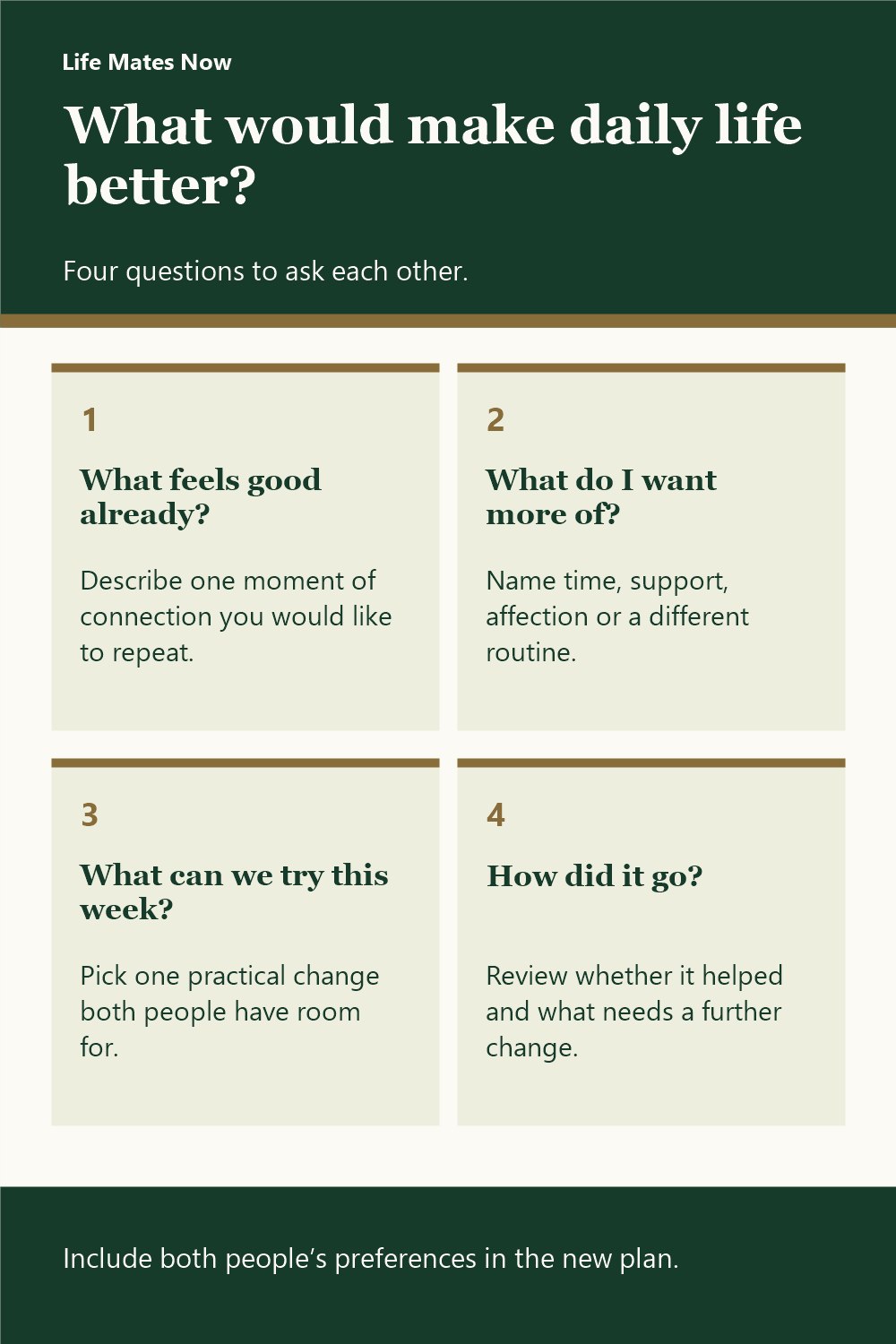
What would make daily life better? Four questions to ask each other.
- What feels good already? Describe one moment of connection you would like to repeat.
- What do I want more of? Name time, support, affection or a different routine.
- What can we try this week? Pick one practical change both people have room for.
- How did it go? Review whether it helped and what needs a further change.
Include both people’s preferences in the new plan.