

Loving someone you cannot be with can leave you grieving both a person and the future you imagined. The obstacle might be distance, an existing commitment, different plans or feelings that are not returned. Knowing why a relationship cannot happen does not make the disappointment disappear.
You can take your feelings seriously while making choices that respect everyone involved. Start with what is actually available, then decide what contact, support and everyday structure would help you now.
On this page
1. Name the situation you are facing
Separate an obstacle you could discuss together from an answer you need to respect. Two people who both want a relationship might consider whether travel, timing or practical plans could work. Someone who has declined a relationship is not offering a problem for you to solve.
Ask once for relevant clarity if contact is welcome and the situation is genuinely unclear: “Are you interested in a relationship, and is that something you are available for now?” You do not need to persuade someone to explain every private reason behind their answer.
If they are already in an exclusive relationship, avoid building your plans around a promise that they will eventually leave. An uncertain future does not provide the relationship you need today. You can choose to step back without judging your feelings or competing with another person.
2. Make room for feelings without pursuing a different answer
You may miss them, feel angry about the circumstances or wish the connection had happened at another time. None of those feelings requires you to contact them or wait indefinitely. You can acknowledge a hope while deciding not to organise your life around it.
The NHS guidance on grief and loss recognises relationship endings as a form of loss and explains that people can respond differently. You do not need to follow a particular sequence of feelings or compare your response with someone else’s.
If spiritual beliefs help you reflect on the connection, you can keep that meaning personal. A sense of destiny, a dream or a reading does not establish the other person’s consent or promise that circumstances will change.
3. Choose a workable contact boundary
There is no single contact rule that fits every situation. A period without personal messages may help you create space. If you share work, parenting or other responsibilities, keep necessary communication focused on those matters and choose a manageable channel.
- Private conversations: decide whether late-night chats, flirting or relationship updates keep you in a role you no longer want.
- Shared responsibilities: agree on relevant topics and practical arrangements where possible.
- Mutual friends: ask for company without requesting reports about the other person’s dating life.
- Social events: choose what you feel able to attend; you do not have to prove that seeing them is easy.
A brief message may be enough: “I need some space from our personal conversations. I’ll still reply about the project.” If the other person has requested no contact, respect that limit. If contact feels threatening, seek individual safety support rather than arranging a private meeting for closure.
4. Reduce reminders you keep returning to
Notice which habits leave you feeling more caught up: checking a profile, rereading affectionate messages or searching for hidden meanings in ordinary interactions. You could mute updates, archive a conversation or put keepsakes somewhere less visible. Choose a reversible step if that feels more manageable.
These choices are about the space you need, rather than a way to make someone miss you. Avoid testing their interest through silence, jealousy or messages sent through friends. You do not need to monitor whether your boundary has produced a reaction.
When you want to check again, try naming what you are looking for: reassurance, news or a reason to hope. Consider whether a different action could meet part of that need, such as calling a trusted friend or making a plan for the evening.
5. Keep support and ordinary life available
Choose one manageable action for the next day: prepare a meal, complete an essential task or arrange a short visit with someone you trust. You do not need to fill every hour or become a different person to deserve a relationship.
Tell people what would help. “Could we spend some time together without discussing them?” is as valid as asking to talk about the loss. A friend can listen without contacting the other person or trying to negotiate a reunion.
If distress is making everyday life difficult, or you are struggling to cope, consider speaking with a qualified health professional. Support is available even if the relationship was brief, never became official or was mostly something you hoped for.
6. Decide what comes next at your own pace
You may want a break from dating, or you may later feel interested in meeting someone new. Neither choice measures how much you cared. Be honest about what you are available for, and let another person make their own choice about getting involved.
If circumstances change, assess the current situation rather than relying on the old promise. Is the person available? Do you both want the same kind of relationship? Are the practical arrangements workable? You can ask these questions and still decide not to reconnect.
For now, a useful next step can be small: one contact boundary, one source of support and one plan that belongs to your own life.
Read the infographic in text
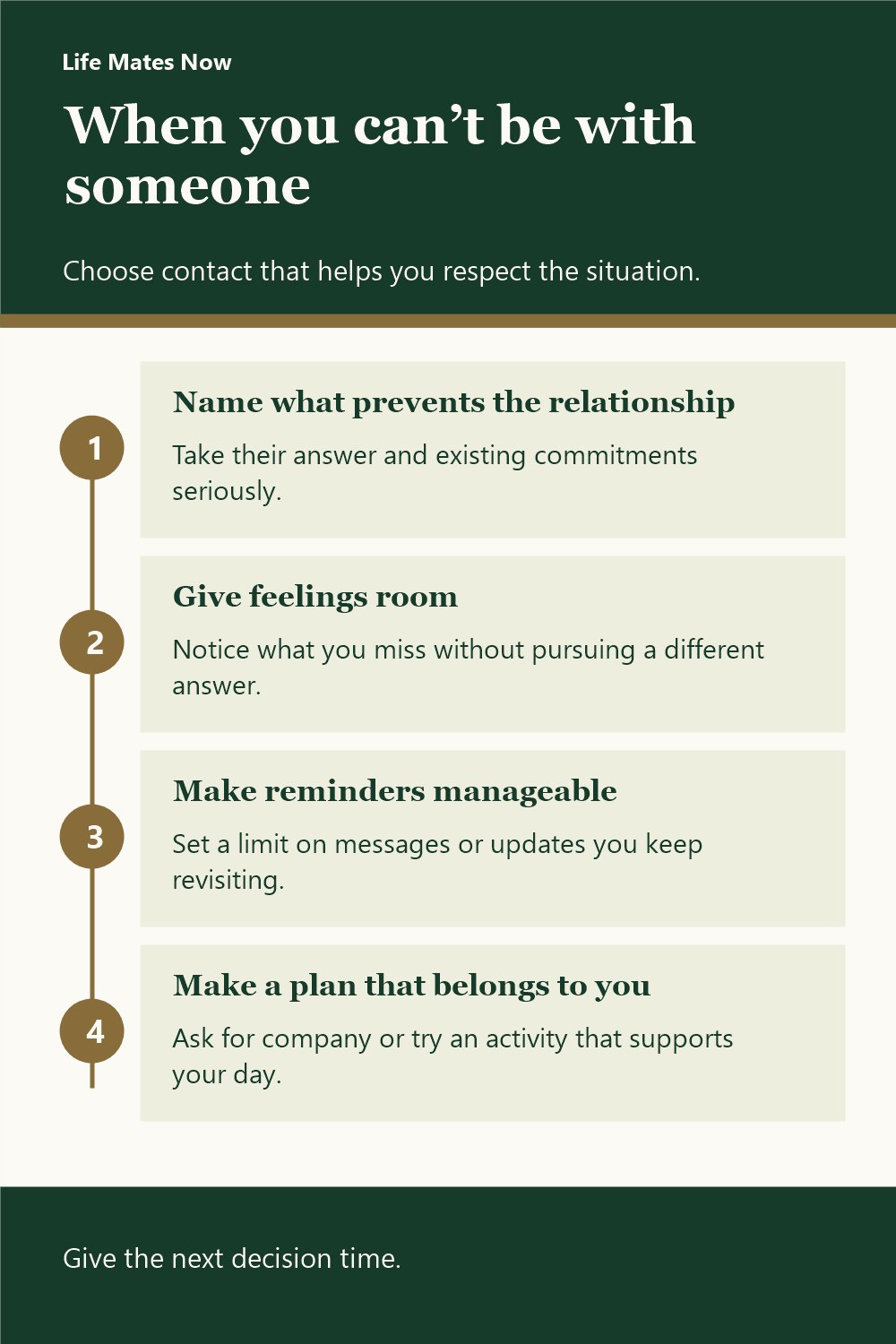
When you can’t be with someone Choose contact that helps you respect the situation.
- Name what prevents the relationship Take their answer and existing commitments seriously.
- Give feelings room Notice what you miss without pursuing a different answer.
- Make reminders manageable Set a limit on messages or updates you keep revisiting.
- Make a plan that belongs to you Ask for company or try an activity that supports your day.
Give the next decision time.