

A change in desire or a difference between partners can raise questions about closeness, affection and expectations. It does not, on its own, tell you how much someone loves you or whether the relationship is healthy. There is no frequency of sex that every couple must meet.
For adult partners who want to explore the change together, begin with an honest conversation and room for either person to decline sexual contact. The aim is to understand what feels welcome, rather than make someone become more available.

Describe the change without assigning blame
Be specific about what you miss or find difficult: time together, affectionate contact, feeling wanted or being able to discuss a difference. Avoid treating a partner’s lower desire as a personal failure or proof that they no longer care.
Ask what the change means to them too. You may have different concerns, and neither person has to supply an immediate explanation. A conversation can begin with curiosity while leaving room for uncertainty.
Choose a time without an expectation of sex
Talk when neither person is being asked to respond to an invitation in the moment. You could begin, “I miss feeling close, and I would like to understand what feels comfortable for us.” Invite an answer rather than presenting a list of things they must change.
Listen for preferences and limits as well as possible frustrations. If the discussion becomes tense, agree to pause and return to it. Repeated pressure, guilt or threats are not a way to negotiate intimacy.
Consider everyday pressures and health concerns
Time, privacy, tiredness and responsibilities may affect what either person has room for. The NHS information on low sex drive also describes possible links with health conditions, medicines, stress and other circumstances. A checklist cannot identify the cause for you.
If a change worries you, or you have pain or other symptoms, speak with a healthcare professional. If you think a medicine may be involved, discuss it with the prescriber rather than changing it yourself.
Keep affection free from an automatic next step
You may want conversation, a hand held, a hug or time sitting together. Ask what is welcome instead of assuming that affectionate contact must lead to sex. You can also prefer space or a different form of connection.
Consent remains specific, ongoing and freely chosen. The Health Service Executive explains sexual consent and the right to change your mind. A past yes or an existing relationship does not create present permission; stop and check in if you are unsure.
Try an enjoyable activity because you both want it
A shared interest or a change of routine might give you time to enjoy each other’s company. Choose something that fits your access, energy and budget, whether familiar or new. An ordinary conversation over a meal may suit you better than a class or a trip.
Agree on the plan without making further intimacy part of the bargain. Enjoying an activity does not commit either person to sexual contact afterwards. You can finish the outing, change the plan or decide you would prefer a different way to spend time together.
Discuss possibilities without creating a performance list
If you both want to talk about intimacy, describe preferences and boundaries at a level you are comfortable sharing. You do not have to produce a list of fantasies, rate activities or consume sexual material as an assignment.
Keep any plan specific and optional. Either person can decide against it later, and agreement to discuss something is not agreement to do it. Different preferences may need continued conversation rather than a single compromise that leaves someone feeling pressured.
Choose support that respects both people’s choices
You might consider a healthcare professional for a health concern, or a suitably trained relationship or sex therapist for help discussing a difference. Check relevant training, professional registration where applicable, fees and privacy arrangements. Ask what the service involves and whether it fits the concern you want help with.
If you feel coerced, controlled or afraid, seek confidential individual support from a specialist service rather than relying on a joint exercise to make the situation safe. You do not owe sexual contact in order to keep a relationship or qualify for help.
Choose affection each person can freely enjoy
If you miss being close and you’re unsure what your partner wants, ask during a calm part of the day. “Would you enjoy sitting together after dinner, or would you prefer some time on your own?” Each answer is an option you can respect.
If the change in desire concerns either of you, a healthcare professional can discuss possible influences and appropriate care. Keep changes to medication or treatment for a conversation with the relevant clinician.
Read the infographic in text
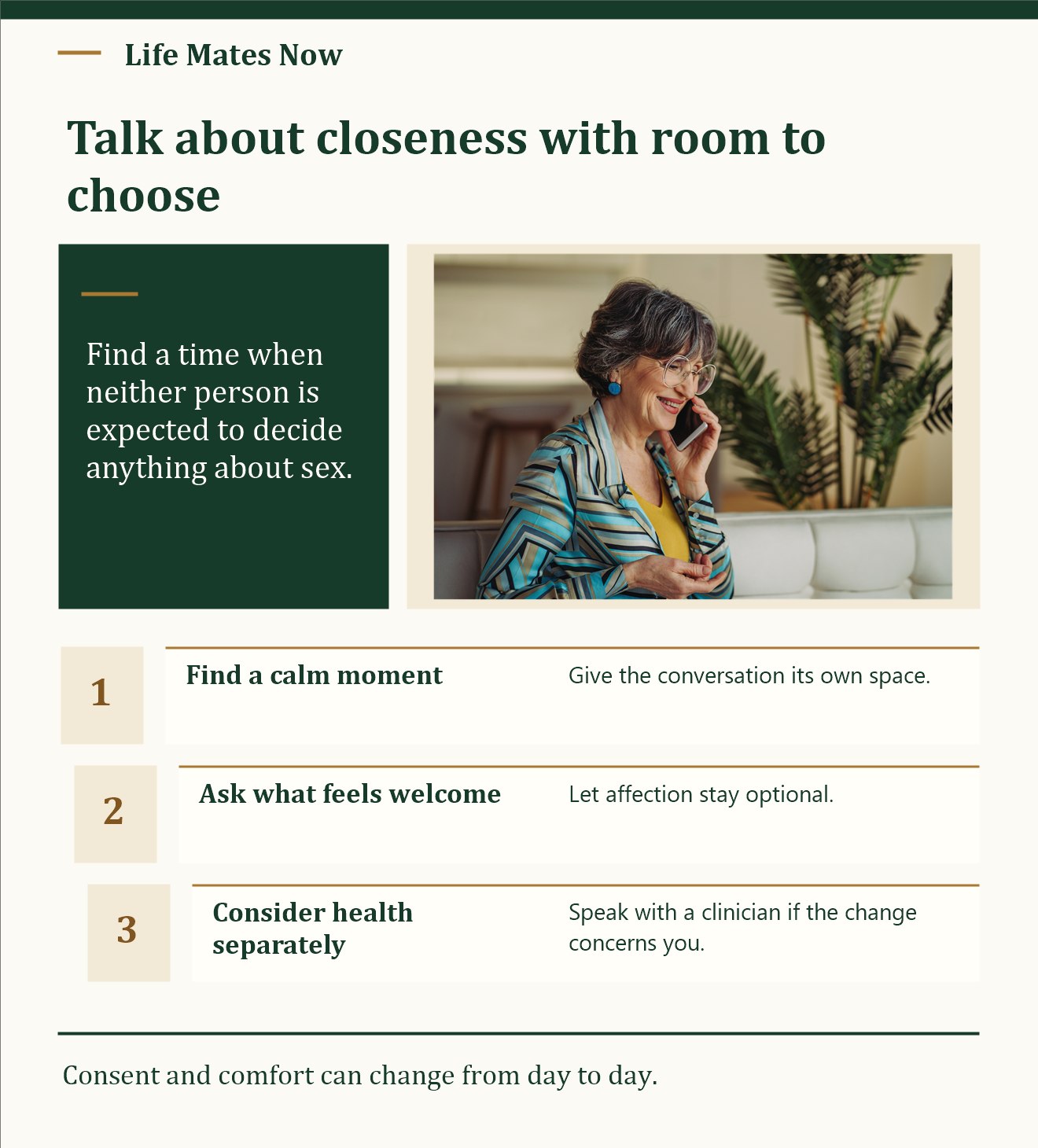
Talk about closeness with room to choose
Find a time when neither person is expected to decide anything about sex.
- Find a calm moment Give the conversation its own space.
- Ask what feels welcome Let affection stay optional.
- Consider health separately Speak with a clinician if the change concerns you.
Consent and comfort can change from day to day.