

A relationship may feel soul-nourishing when you feel known, cared for and able to be yourself. Some people understand that connection spiritually; others describe it through friendship, trust or shared values. You do not need a particular label for the relationship to matter.
Rather than look for proof that a bond is destined, consider what happens in everyday life. Can both people express needs, make choices and receive care? The following questions can help you think about the relationship without turning its difficulties into a test of your worth.
Care that makes room for two people
A close partner can bring comfort and companionship without completing a missing half of you. Both people still have their own preferences, limits and relationships. Wanting reassurance or help does not make you incomplete, and enjoying time alone does not mean you care less.
Look for ordinary examples of mutual attention: listening when something matters, checking whether a plan works for both people and taking an interest without taking over. Care need not look identical on each side. It should leave both people feeling that their needs can enter the conversation.
Responsibility without taking all the blame
You can reflect on how you speak, handle frustration or follow through while recognising that another person is responsible for their own behaviour. Their dishonesty, threats or controlling actions are not evidence that you failed to love yourself enough.
For a manageable disagreement, name the pattern and one change you want: “When plans change without a message, I cannot arrange my evening. Can we agree to let each other know?” Notice whether the other person engages with the concern. If raising a need brings intimidation or retaliation, private support and safety may be more useful than another attempt to explain perfectly.
Vulnerability you can choose
Sharing a worry or hope can deepen understanding when the response is respectful. You decide what to share, when to share it and how much detail feels right. Intimacy does not require immediate access to every memory, password or private conversation.
Start with something you want the other person to understand and say what would help: “I would like you to listen before offering suggestions.” You can pause an uncomfortable discussion. A caring response makes space for that boundary rather than treating disclosure as a price of admission to the relationship.
Independence alongside welcome support
Keeping friendships, interests and decisions of your own can matter alongside relying on each other. Independence is not a demand to manage every difficulty alone. Disability, illness, finances and caring responsibilities may shape how you share everyday tasks.
Talk about the actual support each person needs and can offer. For example, one person may help with transport while the other handles a recurring household task. Check whether the arrangement remains workable and whether either person needs help beyond the couple. Receiving care does not erase your right to make choices.
Commitment that remains freely chosen
Working through a disagreement may involve patience, apologies and changed behaviour. It also requires willingness from both people. One person cannot create a healthy relationship by enduring more, making every compromise or believing strongly enough in a spiritual bond.
Consider what repair would involve and whether it is happening. A promise matters more when it is followed by a specific change. For more on keeping affection alongside your limits, read Caring Deeply Without Losing Your Boundaries. Commitment does not require staying where you are harmed or where your choices are repeatedly dismissed.
Room to change without a promised outcome
People may change their goals, beliefs, health needs or preferred ways of spending time. Change does not automatically deepen a connection or mean it has failed. Ask what has shifted, what still matters to each person and whether there is a workable next step you both want.
You might agree to revisit how you divide time or responsibilities, seek support, or recognise that your wishes no longer fit together. A relationship can have been meaningful even if it ends. “Soul-nourishing” is most useful as a way to reflect on care you experience, rather than an obligation to preserve a particular outcome.
Read the infographic in text
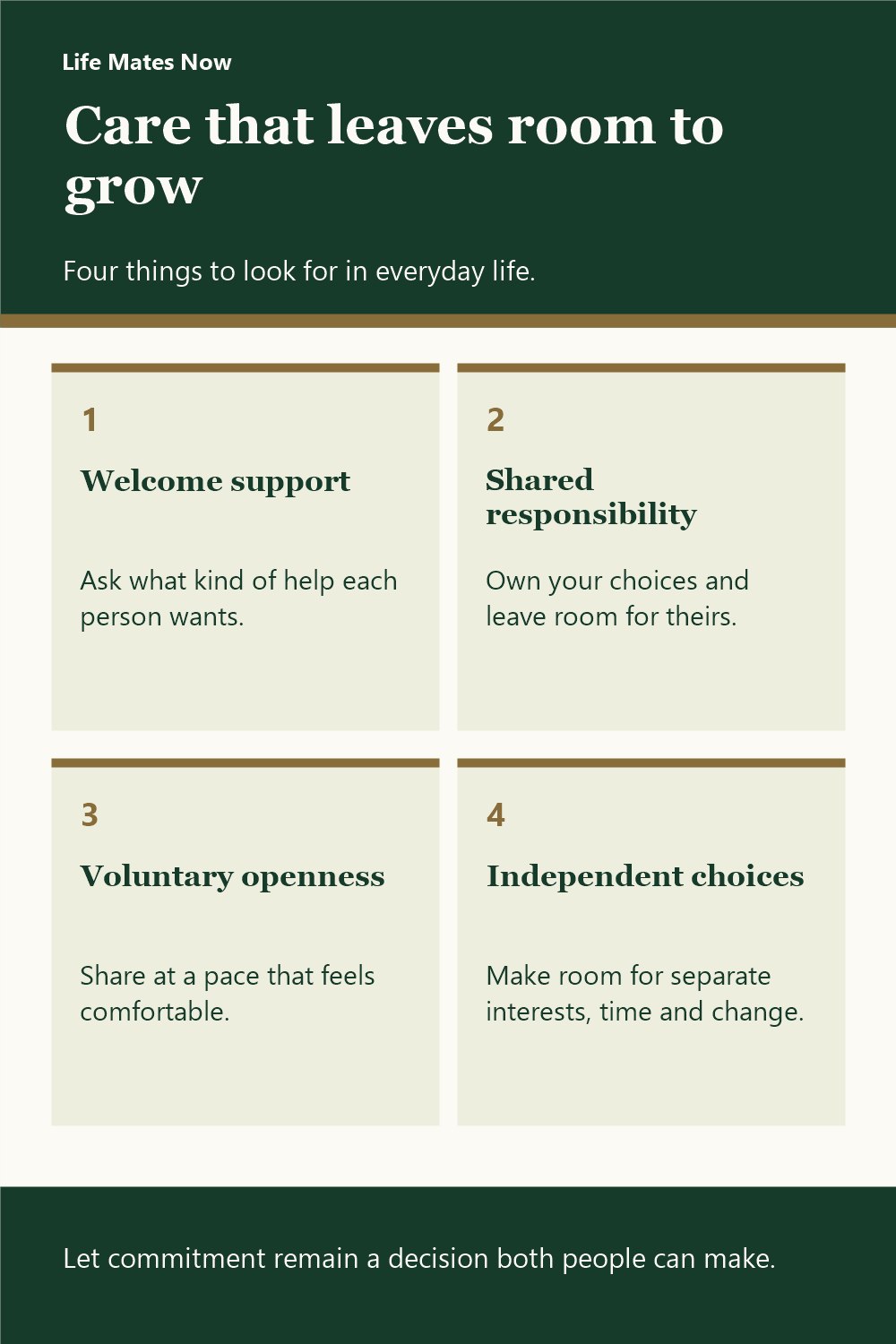
Care that leaves room to grow Four things to look for in everyday life.
- Welcome support Ask what kind of help each person wants.
- Shared responsibility Own your choices and leave room for theirs.
- Voluntary openness Share at a pace that feels comfortable.
- Independent choices Make room for separate interests, time and change.
Let commitment remain a decision both people can make.